Archive | Politics

Starting an EU reading list

Posted on 28 August 2010 by nosemonkey

After nearly ten years of putting up with me blathering on about it, and just as I’ve started to find the whole thing more tedious than ever, the missus is starting to get interested in the EU. (Poor woman…)

As such – and further inspired by Eurogoblin’s excellent recent post on the history of European integration (very similar to something I’ve been meaning to write for years but have never got around to), Ralf Grahn’s follow-up, suggesting some of his favourite Italian books about the concept, and the fact that numerous people (not just the wife) have asked me to recommend books over the years – I reckoned it was finally time to get started on compiling a list of some of the best books on the EU and Europe, both for those starting out in EU affairs for the first time and those who want to learn more.

So, this is the first in what I hope will become a new series in which I’ll start compiling an EU reading list. But I won’t confine myself just to dusty political / historical text books. Instead, I’ll also explore some of the best magazines, articles, websites, blog posts, films, documentaries, novels, paintings, sculptures, music and whatever else springs to mind that can aid understanding both of the European Union as political project, and the concept of Europe itself. Hell, the strapline of this blog has been “in search of a European identity” for years now, and I’ve still not quite got around to exploring the concept.

Added advantage? It can help sate my bibliophilia, and give purpose to my reading / re-reading.

Suggestions for inclusions welcome – though I’ve got enough chunky tomes piled high in the flat to keep me going for a fair while yet…

Note to publishers: Yes, I will gladly accept review copies. But don’t expect a favourable review, just because you bung me a freebie. I’ve reviewed books professionally for several years now, including for the Times Literary Supplement, and have my (modest) reputation to consider… If you have a book (or DVD, or whatever) you think should be included in the list, get in touch via info {at} jcm.org.uk

Comments (20)

Best anti-EU comment ever?

Posted on 02 July 2010 by nosemonkey

More egg nonsense, I’m afraid, but this was too good not to share. From the comments to inexplicably popular UK political blogger Iain Dale’s “you couldn’t make it up” post about the made-up story about the EU banning the selling of eggs by number:

“At June 29, 2010 10:45 AM, Roger Thornhill said…

@Douglas “The weight needs to be displayed. That is all.”

Replace “weight” with “yellow star” and the penny might just drop for you.

Yes, that’s right – someone whose chosen online pseudonym is the name of Cary Grant’s falsely-persecuted everyman in Hitchcock’s conspiracy thriller classic North by Northwest is comparing a regulation asking for food packaging to include an indication of the product’s weight to the start of the Holocaust.

First they came for the egg boxes, and I did not complain, for I was not an egg box…

As I say, sometimes it can be very hard to take eurosceptics seriously… This is now my new favourite stupid anti-EU comment of all time, swiftly overtaking one-time sensible anti-EU blogger Tim Worstall’s bizarre allegation that I simply *must* be in on the grand EU conspiracy – how else to explain someone saying that europhobic bullshit is, erm… europhobic bullshit? (Though to be fair on Tim, he’s only the latest in a long line of ranting maniacs to flatter my ego with suggestions that people might find me worth bribing.)

I do love writing about the EU sometimes – it has a wonderful tendency to bring out the very maddest in people.

Comments (16)

The Food Standards Agency responds over their EU banning selling eggs by number quote

Posted on 01 July 2010 by nosemonkey

Following the nonsense over the EU banning selling eggs by number, many have seized on the anonymous Food Standards Agency spokeswoman quoted by the Mail on Sunday as saying “This proposal would disallow selling by numbers. Retailers would not be allowed to put “Six eggs” on the front of the box. If it was a bag of rolls, it would say “500g” instead of six rolls.”

I asked the FSA for a clarification: At no point in the document is there any mention of labelling being forbidden in the way that your unnamed spokesperson claims. Yet this quote is now being used in numerous follow-up articles to justify outrage over a move that isn’t even being proposed… I would be most grateful for a statement to clarify the situation. Is it actually the FSA’s stated belief that the EU is planning to make labelling a box of six eggs with “Six Eggs” illegal, or was the unnamed spokesperson speaking out of turn?

I received the following response:

Since the report over the weekend in the Mail on Sunday re: FIR selling by number proposals, the FSA has now updated its position. I hope this makes things clear:

Consumers are used to buying some products such as eggs by number and we want to ensure this continues.

We will continue to press in Europe for the ability to sell food by number, ensuring it appears on the face of the proposals. This will provide clarity for both consumers and industry.

Not quite good enough, I thought, so I went back to them: Does the FSA still believe that the proposed legislation would disallow selling by numbers? A simple yes or no would be much appreciated. Their reply:

apologies if we appeared not to be answering your question. But it’s not a case of a yes or no answer. The draft regulation specifies the ways in which net quantity may be expressed, which does not include number [their emphasis]. The draft regulation does include a mechanism through which the Commission could allow some deviation from selling by weight or volume but we do not think this is clear enough.

We will continue to press for provisions in the regulation which would clearly enable food to be sold by number.

Please note “we do not think this is clear enough“. In my books, that’s not the same as the categorical “would“s of the original Mail quote.

They are, of course, technically correct. The draft legislation doesn’t make explicit mention of allowing eggs (or other foodstuffs) to be sold by number. But that is not the same as a ban – not by a long stretch. It seems the FSA has now realised this – but is reluctant to fully admit its schoolboy error.

(And yes, I am aware of the meme popular in certain anti-EU circles about Napoleonic Law versus Common Law and how the EU uses the former which only permits things explictly stated while the latter allows everything *except* things explicitly stated. It’s a load of ahistorical abject bollocks made popular by people who haven’t got the first clue about how EU Law actually works. In any case, it matters not a jot in this instance, as Britain (or, at any rate, England, Wales and Northern Ireland) still has its Common Law, and would therefore not be obliged to stop eggs being labelled by number even if the final version of this proposed legislation forgot to include an explicit opt-out.)

Comments (10)

Britain’s new foreign policy approach

Posted on 01 July 2010 by nosemonkey

As regular readers of this blog will know, my single biggest worry about the Conservative party taking office in the UK was the prospect of arch-eurosceptic William Hague taking over the Foreign Office (the man who, as leader of the party back in 2001, ran a last-ditch general election campaign on the slogan “7 days to save the pound”).

Hague has repeatedly rattled his sabre in the direction of the EU, making numerous references to “repatriating” powers from “Brussels”, and often seeming to believe numerous Europhobic myths about the way the EU operates.

After 13 years of a supposedly pro-EU government which repeatedly refused to constructively engage with our continental partners, my fear has been that the incoming Conservative government (even with the tempering effect of their more pro-EU Liberal Democrat partners, led by former Commission official and ex-MEP Nick Clegg) would pull the UK even further from Europe’s heart. This, I am certain, would be disastrous – both for Britain and for the EU itself, but mostly for Britain.

Today, Hague is giving his first major speech since becoming Foreign Secretary. So let’s have a quick look at some of the highlights – especially in relation to Britain’s future policy towards the EU. It must be said, there were a few pleasant surprises…

Continue Reading

Comments (3)

You COULD make it up: On abolishing eggs by the dozen

Posted on 29 June 2010 by nosemonkey

EggsSo, the EU is apparently planning to make it illegal to sell eggs by the dozen – or indeed to sell any products at all by number, instead forcing producers and retailers alike to sell only by weight.

“Utter madness!”, you cry. “How could anyone possibly be so stupid? It’s ridiculous!”

Yes. Yes it is ridiculous.

The story started (as far as I can tell*) in the europhobic Mail (over 1000 outraged comments and counting), before spreading to the usual suspects of the anti-EU blogs and the knee-jerk eurosceptics of Tory blogland – the latter starting with the classic cliche “You really couldn’t make it up”.

By the end of Monday, 28th June, the story had even spread to the BBC where, as of 10pm, it was ranking as the second most popular story on the site.

Shamefully for the BBC – supposedly a bastion of responsible journalism – this is a story made up entirely of quotes from supposed experts who evidently don’t know what they’re talking about, with “A UK minister” and an unnamed spokesman from the UK Federation of Bakers being added to the anonymous source that started the hysteria rolling, the “FSA spokeswoman” quoted by the Mail, who says:

“This proposal would disallow selling by numbers. Retailers would not be allowed to put “Six eggs” on the front of the box. If it was a bag of rolls, it would say “500g” instead of six rolls.”

This statement is utterly false.

Indeed, all you have to do is read the proposed regulation itself (warning: PDF) – which makes precisely no mention of outlawing selling by numbers.

In fact, quite the opposite – Annex VIII makes explicit exceptions for foods “which are sold by number”. (This only slightly amended in the final version, despite the apparent claim in the BBC article that such a get-out had been rejected.)

John Band – formerly something of an expert in the food industry in the real world – has already successfully demolished all claims that selling by numbers will be outlawed. He also helpfully points out that

eggs are already graded by weight – e.g. a ‘large’ egg weighs 63-73g – which requires them to be weighed

.

Of course, the *existing* legislation requiring eggs to be weighed is just one part of a vast array of rules and regulations that cover food packaging – none of which, it would appear, most of the supposed experts quoted in all the media coverage of this non-story know anything about.

Indeed, back in April, Compassion in World Farming was complaining about the very same proposed bit of legislation – because it threatens to *reduce* the amount of information currently required (under rules brought in a decade ago).

And please note, from that September 2000 article, this:

“To date, it has been mandatory to put the following indications on packs of eggs: the name of the trader, the number of the packing centre, quality and weight grading, number of eggs, date of minimum durability and appropriate storage, recommendations, particulars as to refrigeration/preservation in the case of grade B eggs (refrigerated or preserved eggs), packing date for eggs of other grades and for imported eggs”

Where this has been turned by the Mail and the rest of the anti-EU crowd into a story about Brussels bureaucrats’ mad over-regulation, the truth of the matter is *precisely* the opposite – these new rules are instead entirely and explicitly about deregulation, as anyone who read the original document would be able to see in a second.

The aim is not to force food producers to include *more* unnecessary information on their packaging, but to remove the existing requirements to include insane levels of detail about (for example) farming conditions, nutritional information, etc. etc. etc. As the proposal itself states:

“The emphasis is on simplifying the regulatory process, thus reducing the administrative burden and improving the competitiveness of the European food industry”

And this, ladies and gentlemen, is why you should never believe anything you read in the British press. All it takes is one hack staff writer on a paper with a political agenda to get something wrong, and soon everyone else is following the story up – not by going back to the supposed source of the outcry, but by phoning various rent-a-quotes and asking them their opinion on something they almost certainly know even less about than the journalist who started the whole thing rolling:

Hack journalist: “Hi, it’s Christopher Leake from the Mail on Sunday. What do you think about the EU’s proposals to ban selling eggs by the dozen?”

Anonymous spokesperson: “Eh? They’re proposing what? That’s ridiculous! [Insert ill-informed rant]

Hack journalist following up initial bullshit story: “Hi, it’s Laurence Peter from the BBC. I just wanted to get your opinion on this story about the EU banning the selling of eggs by the dozen.”

First MEP to pick up the phone (in this case Glenis Willmott): “Oh, the BBC? Right… Erm… (Shit! I can’t let on that I don’t know what I’m talking about… Erm…) Well… [Insert off-the-cuff vaguely plausible explanation of why legislation that doesn't actually exist might possibly be considered sensible, plus vague assurances that there are normally get-outs for this sort of thing, thus lending even more credence to the story even though there's nothing actually going on.]

And thus another Euromyth is born. It’s all strangely familiar – once again, EU deregulation is presented as over-regulation thanks to the seemingly wilful ignorance of the anti-EU press, and the poor journalistic standards of the rest of the media. Even though this story is utter bollocks, expect it to be trotted out for years to come. Just like with those straight bananas

UPDATE: A categorical rejection of this story from the European Parliament itself:

The European Parliament’s rapporteur on the food labelling regulation, Renate Sommer (Germany, EPP group) responded today: “In principle, there will be no changes to selling foods by quantity. Selling eggs by the dozen, for example, will not be banned”.

UPDATE – 1st July: The Food Standards Agency has responded to my request for a clarification of their position, following their anonymous spokesperson’s misleading quote in the Mail.

UPDATE 2: Just came across this, via the Scottish Executive. A handy summary of existing EU egg labelling regulations. Please note:

“Minimum standards of quality and weight grading

“The regulations apply to hen eggs marketed within the Community. They do not apply to eggs sold direct by producers to the final consumer at the farm gate, in local public markets (with the exception of auction markets), or by door-to-door selling. “

Please note also that there is already a requirement to own “a machine for grading the eggs by weight”.

There. Is that categorical enough for you?

* I very much doubt the story actually originated at the Mail – they don’t have the resources to trawl through reams of EU legislation looking for things that they can turn into stories, because the vast majority of EU legislation is deeply boring and innocuous. I’d imagine that they got the tip-off from some anti-EU campaign group, think tank or party, probably in the form of a press release, and that the Mail also didn’t bother to look at the original text but just leapt straight onto the phones looking for quotes to pad the story out a bit. But I don’t know this for certain and so – unlike the Mail – I’m not going to state it as fact.

Comments (27)

On increasing the number of MEPs

Posted on 24 June 2010 by nosemonkey

The European Parliament is getting bigger – 18 new MEPs joining (thanks to the Lisbon Treaty), taking the total to 754.

Cue the predictable outrage from the usual suspects about the “cost” of these new MEPs, rent-a-quote eurosceptic think tank Open Europe telling the eurosceptic Telegraph:

“It’s strange that the EU sees it fit to go through a complicated process of treaty reform just to provide for more jobs in the European Parliament – at a time when virtually every country in Europe is cutting back… This says a lot about the EU’s priorities. If anything, the EU’s institutions should be slimmed down.

To start, let’s ignore the fact that this wilfully ignores that the additional MEPs were agreed years back, before the credit crunch hit, and that EU decision-making takes so bloody long that agreeing to change this hard-fought (but minor) amendment would be a logistical nightmare that would cost far more than the £28 million quoted as the cost over the next four years.

Instead, how about we look at the claim “If anything, the EU’s institutions should be slimmed down”. Why? Well, the implication is because they should cost less.

But, of course, the EU’s budget is a paltry €142.6 billion for 2011 – a tiny, tiny fraction of the total UK budget (about the same as the UK’s Department for Work and Pensions, in fact – and rather less than the UK government’s 2009 borrowing of £154.7 billion).

Cutting the EU’s budget is about as effective as those headline-grabbing, but drop-in-the-ocean, pay cuts for ministers. Cutting the Prime Minister’s salary by a few thousand a year when the budget deficit is running to the tens of billion is nothing but a PR ploy, and anyone with any sense knows it. The same goes for Open Europe’s knee-jerk calls for EU cutbacks. They’re a nonsense.

In fact, what anyone who really wants to see European governments save money *should* be doing is calling for *more* decision-making and legislating to be pooled at a European level.

Because if decisions are being taken at an EU level, this is because several EU member states want to do roughly the same thing. Therefore pretty much *every* decision taken at EU level is saving money.

(Sorry for the absence of late, by the way – *immensely* busy with the day job…)

Comments (6)

This blog has been shortlisted for the European Parliament prize for Journalism 2010

Posted on 20 May 2010 by nosemonkey

Details here. I’ve been named the UK finalist in the internet section for my June 2009 post on the percentage of UK laws that come from the EU (also published on Liberal Conspiracy and BlogActiv).

From the announcement:

“An article on the percentage of our laws originating in the EU got the UK nomination for the internet section. The judging panel found James Clive-Matthews’ EUtopia blog overall very entertaining, but selected this entry for its attempt to clarify how the arguments used to make claims about the influence of EU legislation often take original quotes out of context. EUtopia does not draw any conclusions, but lays out the context for the various claims and counter-claims, as such helping to clarify what is often a contentious issue.”

Which is nice.

I would also like to state for the record that nothing I have written on this blog has ever been published with the hope of securing money. It’s all just for my ego – not for anyone else’s, and certainly never to support any political institution or ideology (except on the very rare occasions that I feel that such support is warranted).

So although I find (UKIP press officer) Gawain’s old description of this as the European sycophancy prize amusing, I’d dispute it. Because any blogger/journalist willing to spew out rubbish that they don’t believe in the hope of sucking up to the powerful is never going to be worth reading anyway – and no amount of prixe money will ever alter that.

On a related note: For a more detailed analysis of the percentage of UK laws that come from the EU, check out this detailed report into the subject (PDF). Fascinating stuff – and also tends to support my own vague conclusions.

Comments (3)

The Cameron government and the EU

Posted on 11 May 2010 by nosemonkey

OK, I was wrong – Prime Minister Cameron it is.

I just hope I’m also wrong in my dread of our new Foreign Secretary, William Hague – the most strongly eurosceptic person ever to hold that position, the mastermind behind the Conservatives’ withdrawal from the EPP in the European Parliament, and a man who, back in 2001, led an explicitly anti-EU general election campaign that revolved around the populist nonsense-slogan “Ten Days to Save the Pound”.

Recent devolopments have not been much more promising, an alleged draft letter from Hague leaked to last weekend’s Observer, promising “to demonstrate to the British people and beyond that the UK’s relationship with Europe has really changed… the British relationship with the EU has changed with our election… we will fight our corner to protect our national interests”.

Of course, there’s a good chance that Hague’s euroscepticism may be countered by former MEP and Commission employee Nick Clegg also attending Cabinet in the apparently-offered role of Deputy Prime Minister, but as of 11pm on Tuesday it remains unclear just what role the Liberal Democrats are going to take in this apparent new coalition.

I hope I’m proved wrong. In Hague’s favour, he’s certainly not stupid. And it’s always far easier to take tough, controversial stands in opposition than it is in government. He may yet temper his rhetoric and the Cameron government may yet start to take a more sensible, pragmatic approach towards the EU. I very much hope so – because I, for one, am convinced that the only loser in a “fight” between Britain and the EU (Hague’s phrase) would be the UK.

Comments (9)

Amusing UK election aside: The EU question and UKIP

Posted on 09 May 2010 by nosemonkey

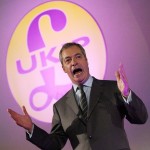
In the unusual Buckingham constituency*, UKIP’s Nigel Farage – advocating withdrawal from the EU – ended up in third place, despite a high-profile (non-fatal) election-day plane crash**.

The amusing news for pro-EU types? Farage was beaten into second place by an independent former Conservative MEP, John Stevens.

Why is this so funny? Stevens was the co-founder of the Pro-Euro Conservative Party.

Ha ha ha! Yes, an arch-eurosceptic beaten in a direct popularity contest by an arch europhile. In Britain.

So much for us all being anti-EU, eh?

My fuller post-election analysis can be found here.

* UK convention states that the major parties don’t run against a sitting Speaker of the House of Commons, leaving the way clear for various fringe parties to get high up the results list. Buckingham is the current Speaker’s constituency, hence the high placements for the likes of UKIP and independents.

** Get well soon, Nigel – but what were you doing going up in a plane with a UKIP banner anyway? Campaigning is expressly forbidden on election day…

Comments (14)

UK election: Where next?

Posted on 08 May 2010 by nosemonkey

Just back from Japan, from where I was closely following the UK election on Twitter (your best place for my day-to-day political commentary these days, though be warned they’re usually more jokey – and sweary – than here…)

After 30 hours offline, and 44 hours after the polling booths closed, the UK still doesn’t have a new government. As such, witness the wonders of my jetlag-inspired political guesswork!

I’d be surprised if this lack of a government lasted beyond Monday morning, largely because the next government will want to look responsible – and we had some serious global financial trouble on Friday for a variety of reasons (NY stock exchange hiccough, Greek crisis, UK election uncertainty, etc.). They’ll want to have a government before the markets open, if they can…)

Here’s what I currently reckon will happen, rejigged from a few comments on Twitter:

Lib Dem leader Nick Clegg’s playing this absolutely perfectly so far – he has solid offers to join coalitions from both Labour and the Conservatives, and significant policy differences with both, and has explicitly stated that the Tories – with more seats and more of the vote – should have the right to “seek to form” a government first.

But the Tories can’t get a parliamentary majority without Lib Dem support. At least, not a stable one. Not the sort of majority that they’d need to do, well, just about anything.

But Labour and the Lib Dems combined can’t get a parliamentary majority without other parties’ support either.

Clegg has also repeatedly mentioned “the national interest” and equated this with electoral reform (unsurprising, considering Labour got only 5% more of the vote than the Lib Dems, but 5 times the parliamentary seats).

The Tories are fundamentally opposed to the sort of Proportional Representation-style electoral reform that the Lib Dems want (usually single transferable vote) – which is hardly surprising, as it would almost certainly lead to a permanent Labour/Lib Dem coalition (there being very few other parties on the centre right that are likely to end up big enough to give the Tories the backing they’d need under such a system).

So, Clegg is giving the impression that he’s willing to work with the Tories – and probably is – but his one major condition is a deal-breaker for Cameron and co.

So I’m now fairly convinced that Prime Minister Cameron’s not going to happen. If Cameron rejects PR, as he must to keep his party behind him (there have already been dire warnings from the right wing of the Conservative Party about such a move, in the shape of Thatcher-era relic Lord Tebbit), then a Lib Dem/Labour/Scottish National Party / Plaid Cymru coalition has first dibs (SNP leader Alex Salmond has already openly proposed this).

Constituionally-speaking, Gordon Brown retains first right to try to form a government, as the sitting Prime Minister in a hung parliament. With Lib Dem, SNP and Plaid Cymru support, the coalition would have an outright majority – able to outvote the Tories and their allies on anything. As such, despite his unpopularity (and calls from within his own party to step down), Brown could yet remain as caretaker PM of a coalition expressly set up to bring in electoral reform.

This would actually be a very sensible option, for several reasons:

1) It would be constitutionally unprecedented for Cameron to form a minority government in the current circumstances – he is impotent until he has enough supporters to claim an outright majority. This looks to be impossible.

2) The constitution explicitly states that Gordon Brown remains Prime Minister, so using him as a figurehead for any new coalition is – constitutionally – the least harmful in the short term.

3) Anyone unhappy with Brown remaining as PM simply adds to the case for major constitutional reform with their objections.

4) This would also give both Labour *and* the Conservatives time to sort themselves out, as they are blatantly in a shambles at the moment.

So, what I’d suggest is a short-term multi-party national coalition *explicitly* for electoral *and* parliamentary/constitutional reform, as well as to maintain some form of stability in the midst of an ongoing financial crisis, keeping Gordon Brown as a figurehead Prime Minister for constitutional reasons alone, with an explicit promise that he will step down once the basic reforms are in place to have a fresh election under a new electoral system.

One final note: There’s nothing to say – constitutionally – that the Prime Minister has to be a party leader. Nor even that he has to be an MP… The question is, is there *anyone* who could be seen as a sufficiently impartial lynchpin to take on the task of leading a coalition of (at least) four parties?

Comments (25)

The Greek crisis, Germany and the future of Europe

Posted on 06 May 2010 by nosemonkey

I’m on the other side of the world at the moment, with limited web/computer access (writing this on a combination of a mobile phone and a computer with a Japanese keyboard and operating system, so likely to be more typo-ridden and less coherent than I’d like), hence even less from me than usual. But this deserves to be noted:

“Europe is at a crossroads,” Merkel declared to the German parliament in Berlin today. “This is about no more and no less than the future of Europe and about Germany’s future in Europe.”

…In return for leading the rescue attempt, Germany is demanding new rules and penalties for the 16 countries taking part in the single currency.

The 16 could not keep muddling along turning a blind eye to the fudges and fiddling of fiscal miscreants, she argued. Instead, persistent breakers of the euro rules could be “suspended” from the single currency, fiscal sinners would have to forfeit their voting rights in EU councils, and would lose EU subsidies.

If there was no alternative, a country using the euro should be allowed to go insolvent, meaning hundreds of billions in losses for international banks and other creditors. This was seen as a warning to the markets betting on a country’s sovereign debt default, while confident that investors would recoup their money from European and German bailouts.

As a last resort, Wolfgang Schaeuble, the German finance minister, is proposing that a persistent rule-breaker be expelled from the eurozone, though not from the EU. Olli Rehn, the European commissioner for monetary affairs, is to unveil proposals next week for new rules that would give Brussels the power to scrutinise national budgets, withhold EU funds, and impose penalties in the eurozone.

The Germans support and oppose some of Rehn’s measures, but are against vesting the powers in the European Commission. Merkel’s proposals are radical and would require renegotiating the Lisbon Treaty defining how the EU works.

Many have argued that European monetary union was never going to work without far tighter centralised controls. They may now be about to be proved right.

For advocates of the euro (and I remain unconvinced one way or the other, seeing it as nice in theory but problematic in practice, as well as relatively convinced that it was a) introduced too soon, and b) too lax on entry criteria), this is a depressing time, with little space for optimism.

For advocates of the EU, it is almost as tricky to see anything positive here. Yes, this crisis may finally underscore something I’ve been saying for years – not all EU member states are equal, so it’s about time we stopped pretending that they are and start considering how to make a multi-tier EU function effectively. But after the decade-long squabbles that led to the final ratification of the Lisbon Treaty six months ago, I can’t see anyone in Europe being keen to start a fresh round of EU reform talks.

At the same time, we are likely to start to see some big shifts in the attitudes of two of the EU’s most important member states, Britain and Germany.

Britain, because of today’s general election, which may see the eurosceptic Conservative party gain power (and, more to the point, the strongly anti-EU William Hague become UK Foreign Secretary), with a number of explicit promises to scale back Britain’s already unenthusiastic involvement in EU affairs.

Germany, because of the understandable resentment from German taxpayers at having to bail out the rest of the EU combining with frustration at being the single biggest contributor to the EU project while at the same time having the smallest amount of influence (in proportion to both economic might and population).

Plus – an important point, this, as so much of Germany’s foreign policy over the last 60 years has been due to residual feelings of guilt and shame over World War 2 – we are entering the decade in which the last WWII veterans are going to start dying off. There is only so long that Europe’s largest economy was going to allow itself to be bossed around based on a geopolitical version of the sins of the father.

The decision of some parts of the Greek press to explicitly bring up the Nazi occupation of that country as a reason why Germany effectively owed them a bailout has only further underlined a feeling that has understandably been rising in Germany for some time now – “the Second World War had nothing to do with me – I wasn’t even born then, so why the hell should I be punished for what my grandparents’ generation did?”

To (only slightly) oversimplify, for the first 50 years of its existence, the EU has been shaped primarily by France and French intersts (note that it was a former French president, not a former German chancellor, who drew up the EU Constitutionh note that the Treaty of Rome contains many France-only clausesh note that France still receives a disproportionate amount of Common Agricultural Policy funds). Germany has tended to stand dutifully in the background, mostly nodding in (sometimes reluctant) agreement, due to a combination of war guilt and genuine enthusiasm for the ideas of European integration.

Germany has invested more in the EU – both financially and philosophically – than any other member state, yet has hed comparatively little say in how the project has evolved.

With the Greek crisis, this could all be about to change. Germany has long had a moral right to have a greater say in EU affairs – this may be the moment when she starts to assert that right.

I, for one, am hopeful that this could prove very positive indeed. Not in the short-term, perhaps – but in the medium-term this may, with any luck, see the EU reconstituted on more sensible grounds, where weak economies are no longer able to drag down the strong, and where rather than progressing at the pace of the weakest or most reluctant member state, those that are stronger or more enthusiastic for further integration can finally be allowed to truly flourish.

Update: The Centre for European Reform seems to be thinking on similar lines about the Germany-EU relationship… Key quote:

It is hard to see how the EU could make progress on anything – whether it is services market liberalisation or a common energy policy – with a reluctant, grumpy and inward-looking Germany at its heart.

It is time for some damage limitation.

Comments (9)

The EU’s role in UK immigration

Posted on 07 April 2010 by nosemonkey

Just a quick note for future reference, as most people who blame the EU for “uncontrollable” immigration (*ahem* UKIP *ahem*) tend not to know what they’re talking about – but also tend not to believe anything you say unless it’s from an “unbiased” (read, “eurosceptic”) source.

As such, from today’s Daily Mail – one of the most fervently anti-EU newspapers in the UK:

“Officers told the migrants that, under EU rules, if they haven’t worked for the last three months they can removed from their host country…

“People from EU countries have a right to travel freely in the EU and can live in the UK for up to three months if they can support themselves.

“After that time, they can only stay in the country if they are working, they are registered students or they are self-supporting.”

See also the (eurosceptic) Daily Telegraph:

“Migrants who have not found work and are sleeping rough will be deported because they are not protected by the EU rules on right to free movement…

“Under EU rules, citizens have the right to stay in another member state for up to three months but after that time they must be able to support themselves either through working, studying or be self-sufficient.

“If not, they can be deported to avoid them becoming a burden on the state and taxpayer.”

And more from the decidedly anti-EU Daily Express:

“Migrants from EU countries can travel freely in the EU and live in the UK for up to three months with no questions asked if they have the funds.

“After that they are only ­entitled to stay here if they are working, are registered students or are self-supporting.”

And finally the (violently anti-EU) Daily Star:

“People from European Union countries can travel in the EU and live in the UK for up to three months.

“After that, they can only stay here if they are working, registered students or self-supporting.”

(And yes, it’s safe to say that I never thought I’d use the Mail, Express and Star to prove a point about the EU…)

Comments (38)

Britain, the Conservative Party, David Cameron and the EU

Posted on 03 April 2010 by nosemonkey

If you want to understand Britain’s rather odd relationship with the EU, you could do far worse than read this really rather good overview in this week’s Economist, especially considering its focus on the Conservative party – likely to form the next British government in a little over six weeks’ time.

There are only a couple of flaws (e.g. mentioning a figure of 50% for the number of European laws stemming from the EU, when readers of this blog will be aware that it’s more in the region of 10-30%, depending), and much insightful analysis that tallies 99% with my own views. It also provides one of the best short summaries of the last 40+ years of UK-EU relations I’ve seen.

Below the fold, a few highlights.

Update: It should also be read in conjunction with Charlemagne on eurosceptic think tank Open Europe and the nature of the British press to give the full picture on why the UK is so insistent on remaining utterly ignorant on all matters EU-related.

Continue Reading

Comments (12)

Why no one understands the EU

Posted on 29 March 2010 by nosemonkey

Hell, I’m supposedly a leading EU politics blogger, and I’ve barely discussed what’s been going on in the midst of one of the biggest crises I can remember the EU facing as the various member states try and work out what the hell to do about the Greek economic collapse.

I thought it was just me being lazy, but according to The Week in Bloggingportal roundup of Euroblogs, not a single one of the 555+ EU-related blogs that Bloggingportal aggregates could be bothered to discuss last week’s EU summit.

Of course, that’s not entirely true. Good old Fistful (one of the few EU-focussed blogs to have been going longer than this place) has been covering the Greek crisis in depth for ages now, and had another lengthy post on Friday looking at how the Greek situation could impact on the Eurozone. Yet even Fistful found little room to discuss the machinations at the EU Summit, preferring to focus more specifically on the economics.

And herein lies the problem. Now that the Lisbon Treaty has been passed, the major areas of EU-related debate have shifted – as they often do, when there aren’t treaty negotiations going on – to the economy.

The only trouble is that there have been treaty negotiations going on for so long now (pretty much continually since the late 90s, with first the Nice negotiations, then the discussions that led to the EU Constitution, then the run-up to Lisbon, and Lisbon again after the first Irish referendum) that most EU-watchers (especially us amateur ones) have become more used to constitutional issues than economic ones. We’ve all been looking at the big *political* picture, not the economic one. (And – let’s face it – most people who are interested in politics aren’t very good when it comes to economics… How many newspaper columnists outside the Business section would you trust on economic analysis? How many politicians not involved with a Finance ministry, for that matter?)

But the EU is, at its most fundamental, an economic body. Yes, you can dispute precisely how it goes about it (and you may be one of the conspiracy theorists who sees the economic aspects of the EU as being a mere smokescreen for the political project), but at the EU’s heart lie vastly ambitious economic projects, from the Common Market and Common Agricultural and Common Fisheries Policies through the Eurozone, Regional Development Funds, even the attempts to cut mobile phone tarrifs and promote the free movement of people. All of these are economic at heart – and even if you are one of the conspiracy theorists, they are economic as much as they are political.

But understanding continental-scale economics takes levels of knowledge, reading, education and understanding that most political commentators simply don’t have . Hell, the very fact that there’s still no consensus on the benefits of the euro shows that – and most people who comment on the euro, even those who have the economic background to know roughly what they’re talking about – don’t have the knowledge of the individual economies and polities that make up the Eurozone that would really be necessary to provide a proper analysis (though Fistful and the Economist’s Charlemagne have good stabs at coming close on occasion).

And so what we mostly do, us EU political commentators, is we try to discuss what’s going on in the EU in terms that are easier to understand. We try to treat the EU as if it’s a country, and EU politics as if its the politics of any old nation state. We try to create conflict – as over the European Council Presidency appointment – and we try to create factions – be they pro-EU vs anti-EU (if you’re in Britain), neo-liberal vs socialist, Anglo-Saxon vs whatever you happen to identify with that’s not Anglo-Saxon (if you’re outside Britain), or whatever.

Part of the reason for this is a desperate attempt to get people interested in a subject that interests us – because so few people care tuppence for EU affairs. But it’s also because we understand conflict. We can explain conflict. We can understand personal, selfish reasons for particular policy positions. They make sense to us, looking at the EU from the perspective of people only used to national-level politics. We don’t all understand economics or interntaional law, and none of us understands the politics of all the individual member states. And so we focus on those things we do understand, and read those into everything the EU does.

But the EU is not a single, harmonious entity, and cannot be simply explained. It is made up of 27 individual member state governments (who all still have to agree unanimously on all major decisions, despite being made up of political parties of all stripes), plus the European Parliament, plus the commission, plus the numerous other bodies that hang around the fringes.

If “the EU” decides to act, it is never for just *one* reason. It is for *at least* 27 different reasons. Unlike with national politics, where policy decisions can often be explained in just a sentence, every EU decision is vastly complex – with large chunks of the decision-making process having taken place behind closed doors in languages that you don’t understand.

In short, we can never hope to understand the EU. It takes more economic knowledge than most of us have. It takes more knowledge of the politics and economics of the individual member states than anyone had. It takes an understanding of all the insane confusion of EU rules, reglations, laws and treaties that can only be gained with a lifetime’s study of international and EU law. It takes insider knowledge of diplomatic discussions and deals that will probably never be revealed.

All we can do is guess – and our guesses will *always* be based on only a tiny, tiny fraction of the knowledge that is needed to get close to the truth. In fact, I can state with utmost certainty that anyone who tells you that they understand the EU is either lying or deluded. No one understands the EU. It is simply too big, too complex, too secretive, too multidisciplinary, too multilingual, too innovative, too unique for anyone to be able to grasp it in its entirety.

This, of course, makes it fascinating to those of use who like a challenge. But it also makes it utterly daunting. To try to explain the EU is like trying to climb Mount Everest. Without oxygen. Or ropes. Or protective clothing. With both arms tied behind your back. At night. In a blizzard.

Little wonder, then, that sometimes the enthusiasm leaves us. Some will quit for good. Others will keep bashing away at it – perhaps deluding themselves that one day they will get it. I intend to keep bashing away at it – but after seven years of an uphill struggle, for now I need a breather while I scout out a new route. This economic crisis in Greece and its reveberations throughout the continent has shown that there are some major gaps in my knowledge of the EU, and I need to fill these in as best I can before I continue.

Back soon, I hope. But in the meantime just remember that *no one* knows what’s going on. Keep that in mind whenever you read anything about the EU and you should do just fine.

Comments (24)

Hire Nosemonkey!


MORE EUROBLOGS:
EU Blog Directory | Bloggingportal.eu

Must-read EU blogs | More EU blogs
Politician blogs | Press/Think tank blogs
Subject specialists | The East | The West
New blogroll additions

Like this blog? Why not show a little PayPal love and help keep it going?

Donate in Euros:

Donate in GBP:

Advertisements

Read reviews of Organic Liaison and other new weight loss products!

Head to Boating.com to find boats for sale online from top boat manufacturers