Archive | Britain

Tags: ,

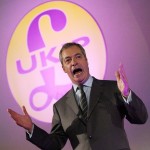
UKIP’s new leader, Lord Pearson

Posted on 27 November 2009 by nosemonkey

UKIP, love them or hate them, have been fairly consistent in one thing over the years – arguing against the EU because it is run by unelected bureaucrats. Just one of their arguments, perhaps – but the democratic deficit claim (though certainly disputable) has long been one of their most popular and successful.

Now, however, on the same day that the new (unelected) European Commissioners have been unveiled, they have chosen as their new leader a man who has never been elected to any public office. In one move, they’ve lost the moral high ground. What’s more, they have often in the past attacked “EU elites” – and to good effect. But now they are being led by an Old Etonian peer of the realm with one of the plummiest accents I’ve ever heard – and I went to a rather snobby public school… You simply do not get a better symbol of “elitism” than an Old Etonian peer.

At the same time as being unelected, Pearson’s obsessions are rather out of kilter with a large chunk of what I had previously taken to be British eurosceptic concerns.

UKIP has long been accused by some of its critics of being a BNP-lite, or a middle-class version of the BNP. I’m not one of them – or, at least, I haven’t been until now. I see most British eurosceptics as being misguided, certainly – but (despite the occasional mockery) I generally respect their concerns about the nature of the EU (and even agree with some of them). I can see why people are worried about decisions being taken in Brussels rather than London, even while disagreeing about it being a problem. I also don’t believe that most eurosceptics are xenophobes, as they are so often accused of being by some.

But with Lord Pearson taking the leadership, I’m not so sure. He was, after all, the person who caused a brief scandal by inviting right-wing, anti-Islam Dutch politician Geert Wilders to the UK to show his polemical anti-Muslim film Fitna. (Which I’ve seen and thought was rubbish. Relatively offensive, for sure, but not enough to be worth banning.)

What’s more, Pearson’s obsession seems not so much to be the EU – as you’d surely expect from the leader of a party set up to oppose the EU and advocate British withdrawal – as to be immigration. Take a recent interview with the BBC, broadcast on The Politics Show on BBC1 last Sunday. Transcript:

Pearson: “Immigration is probably the biggest issue outside the south east of England, and the people have been treated incredibly badly by their political class.”

Interviewer: “So is there a danger that you could be confused – UKIP and the BNP?”

Pearson: “We’ve got to be very careful, erm, especially in this area of immigration, erm, that we cannot be confused with the.. the BNP – I… I accept that. There’s a fine line to be drawn here, erm… But I would also want to bring up…”

Interviewer: “I’m sorry, but are you saying that there’s a fine line between UKIP and the BNP?”

Pearson: “Well, I don’t actually know, erm, the intimate detail of… of the BNP policy. What we would be aiming for is zero net increase, erm, in immigration. So obviously we’re… we welcom asylum seekers, we welcome people of all colours and everything, and in that we’re completely different, erm… t-to the BNP. But we think the prospect of the population moving towards 70 million, erm… you know, within 20 years or so is very worrying. Sharia Law, erm… Islamic law is running in this country in fact, erm, in many areas, which is completely unacceptable if it becomes superior to British law.”

Hardly anything there that doesn’t sound like a paraphrase of the BNP. A point that’s made even clearer by Pearson’s acceptance speech:

Please note again his obsessions:

“Of course we will be majoring on leaving the European Union – we can’t control our borders without that, we can’t control immigration… And we must get around the stranglehold of the political class.”

“The political class” is a favourite phrase of a certain other anti-immigration party leader

In that clip of Pearson’s acceptance speech – uploaded to YouTube by UKIP itself, so surely what the party want the public to see – Pearson spends little more than 15 seconds discussing the EU. The rest is given over to immigration.

So, is UKIP no longer an anti-EU party, but an anti-immigration party? And if it’s both, then what’s the major emphasis – the EU or immigration? And what exactly *is* the “fine line” between UKIP and the BNP?

More importantly, who do British eurosceptics who are opposed to the EU but dislike such hardline anti-immigration rhetoric supposed to turn to now? There are innumerable reasons to oppose the EU that have nothing to do with immigration – yet Pearson seems determined to make this the party’s primary concern. In the process, he is confirming everything nasty that has ever been said about British eurosceptics. And, what’s more, he may well be about to split the party in two. Again. Witness fellow UKIP leadership candidate, Cllr Alan Wood (transcript from BBC Politics Show last Sunday):

Interviewer: “Do you respect Lord Pearson?”

Wood: “No I don’t. I think he’s totally off the wall with his remarks about Muslims and Sharia Law, and for that I can’t respect him”

Inteviewer: “Are you saying that if he’s elected people will think that you’re too close to the BNP?”

Wood: “Yes, yes. People already think we are the BNP. Erm… It’s tragic. It’s tragic that we’ve been painted into this corner.”

Interviewer: “And so if he’s elected, you’re leaving, you’re off?”

Wood: “I cannot stay with Lord Pearson, with those views, and I don’t think he’s the right man.”

Wood will not be alone in this. Members of my family have been known to vote UKIP – some of them as recently as last summer. None of them will approve of the party shifting towards an anti-immigration position – certainly not if that becomes the party’s primary focus, as Pearson seems determined to make it.

There is a place – indeed a need – for a strong, anti-EU voice in British politics. Poll after poll shows the public’s concern on this issue. UKIP – especially after the fall-out from Cameron’s decision about a Lisbon Treaty referendum – was the obvious choice to be that voice. By picking Lord Pearson as leader, I’m afraid that British eurosceptics are being very poorly served by the party. This is bad not just for eurosceptics, but for politics as a whole.

Comments (17)

“No one under the age of 52 has had the chance to vote on the EU”

Posted on 04 November 2009 by nosemonkey

So runs the argument of increasingly prominent anti-EU Tory, Daniel Hannan MEP – still advocating a UK referendum despite the final ratification of the Lisbon Treaty.

This is, of course, very true. Since the 1975 referendum on EEC membership, the British people haven’t had their chance to vote on being part of the EU system.

But when was the vote on constitutional monarchy, an established Church, Cabinet government, a two-chamber parliament, parliamentary sovereignty, a supreme court, the first past the post voting system, our membership of NATO, the UN, the WTO, etc. etc. etc.?

Why the insistence on a public say in one (really rather small) part of the UK’s governance, but not all the rest?

Why the complaints about the unelected European Commission, but no murmurs of dissent about how no one in the Cabinet is elected to that post? (Not to mention the UK civil service…)

Why the complaints about lack of democracy in the EU when the House of Lords remains unelected?

Why the complaints about EU law when most domestic legislation is passed via statutory instruments without so much as a glance from an elected official?

Why the hysteria over the largely powerless Presidency of the European Council, when Her Majesty the Queen retains the right to dissolve parliament and veto any legislation, whenever she likes?

How about, in other words, we put our own house in order before preaching about governmental perfection – and how about we stop with the double-standards? Want the people to have a say in how they’re governed? Fine. Let’s give them a say in all the other areas as well.

But don’t abuse referenda – generally reserved purely for extraordinary constitutional changes – for party political purposes. That way lies the destruction of the very system of government that the EU’s British opponents profess to hold so dear.

Comments (54)

Guest Post: Chris Patten for ‘EU Foreign Minister’?

Posted on 02 November 2009 by nosemonkey

A guest post from that rare beast, an openly pro-EU Tory – in this case Thomas Byrne of the blog Byrne Tofferings, who is keen to sound out the thoughts of a more international audience to his suggestion for the first High Representative of the Union for Foreign Affairs and Security Policy, the successor to the High Representative for the Common Foreign and Security Policy (currently Javier Solana):

Chris Patten has signalled his interest in the High Representative for the Common Foreign and Security Policy position, something I’m going to give my support to.

If you want to look at important conflicts that Britain has been involved with since the EU’s foundation – Falklands, Kosovo, Gulf War, Iraq, Afghanistan, etc. the EU has actively or passively opposed every one, Chris Patten would be the perfect man for turning EU Foreign Policy into a force to be reckoned with.

Chris Patten was the first Governor who actually cared about trying to bring democracy to Hong Kong. Unlike most of his predecessor(s) who were ’sinologists,’ which meant they just kowtowed to Peking, he actually stood up for Hong Kong.

Patten’s experience would be useful in the Balkans – Bosnia, Serbia, Croatia, Macedonia, Albania, Kosovo, Moldova – and Turkey, all of which are pushing for EU membership to a greater or lesser extent. Not to mention some of the Caucasian and Central Asian countries that are members of the Council of Europe, and could down the line become candidate countries – or the elephant in the European room that is Belarus, the last dictatorship on the continent.

In Chris Patten’s book (Not Quite The Diplomat) he suggests the Tories have saddled themselves with a Eurosceptic ideology for no good reason, something that I’d agree with, his Europhile sentiment and his experience within the commission make him the perfect man to slide into this role. Firstly ,because of his experience of EU institutions and dealings with each of the member states, but also when the Tories come into government they’ll be dealing with someone they can relate to, lending a plaster to the Eurosceptic position of some MEP’s like Daniel Hannan, and the grassroots and lead the Conservative party into a position within Europe that would silence those that claim the party are on the fringe.

Comments (5)

On “the President of Europe”

Posted on 25 October 2009 by nosemonkey

The proposed President of the European Council is very far from being “President of Europe” – either in terms of profile or power.

Whoever lands the job (and it’s highly unlikely to be Tony Blair) will have practically zero influence on anything, acting instead as little more than a moderator between the governments of the member states as they continue to run the EU show. And will be in office for just two and a half years – which is no time at all in EU terms (hell, it’s just taken more than a decade to get agreement on a treaty which doesn’t solve half the problems it was meant to…)

Meanwhile the rotating EU Presidency – the Presidency of the Council of the European Union – will continue as usual (currently Sweden, with Spain taking over on January 1st), ensuring that the President of the European Council can constantly be outshone by whoever holds the more established rotating presidency. Because the rotating presidency still has the ability to influence the EU’s focus for the six months that each member state holds it – whereas the President of the European Council will have *no* formal powers whatsoever, and remains hugely ill-defined.

And that’s before you note that the President of the European Council’s role, as vaguely as it has been described, also overlaps with that of the far better-established Presidency of the European Commission (currently Jose Manuel Barroso) and the EU High Representative (currently Javier Solana). A brand new two and a half year office versus two existing five-year offices? I know which ones I’m betting on to have the real power here.

In other words, it really doesn’t matter who gets the gig. It’s not important in the slightest. It’s a meaningless position.

I do get that it’s confusing to have a (proposed) President of the European Council AND a President of the Council of the European Union (not to mention the Council of Europe), but come on – the significance of this is being blown out of all proportion.

(Originally posted as a comment to this article over at the Guardian)

Comments (19)

Tags: , ,

EU regionalism on the decline?

Posted on 22 August 2009 by nosemonkey

Following my recent posts on national vs European identity and regionalism and the EU (as part of a vague attempt to get an idea of the nature and importance of geographical/cultural identity), this may be of interest – Why the end is nigh for regionalism in Europe, from The Lobby. Quick excerpt:

Up until recently this was very much not the case. The Scottish National Party had just won power in their (regional) Parliament in Scotland, the Basque terrorists ETA continue to plant bombs in Spanish coastal resorts, and Belgium was in danger of being torn asunder by its perennial north-south divide. In the Balkans the newly independent states of Kosovo and Montenegro demonstrate that similar regional aspirations have led successfully to self-determination (although Kosovo is still very much a work in progress).

“This apparently contradictory trend of both centralisation towards Brussels and devolution towards the regions looked to be the way forward – until along comes the biggest financial meltdown since the 1930s. Now it’s all about strength in numbers.”

Worth a look – though it’s worth noting that now that France and Germany are out of recession (with the Eurozone’s economy declining by just 0.1% in the last quarter), it looks like all the doomsday scenarios predicted by the economic experts (the self-same experts who failed to predict the economic collapse) may not be quite so catastrophically inevitable after all. If the economy starts to revive again, I’d expect a swift return to business as usual – because there’s nothing the EU does better than the same thing it’s always done…

I’m sure there’s more to be said here about how the first port of call for Catalonia is the national machinery of Spain (the example used in the post linked above) rather than the supranational machinery of the EU.

But I’m not sure how much that would necessarily say about the strength of regional identity in Catalonia – it’s more a comment on the relatively tiny amounts of cash the EU has at its disposal. (The EU’s budget? 139bn euros; Spain’s budget? 374bn euros.)

This tiny EU budget, of course, is something set by the member states. Because it’s not in their interests to give the EU too much cash to spread around – not only might they not be able to control where it goes, but it could also (as if the EU, rather than Spain, came to Catalonia’s aid) help bolster regional nationalist movements and undermine the power of the governments of the member states.

At the risk of annoying a second nationalist movement in a week, this is why – in the present circumstances – I can’t see Scottish independence as being a viable option: the EU simply can’t afford to fill the void that would be left by the withdrawal of UK/English funds.

Comments (1)

Nation states, regionalism and the EU

Posted on 17 August 2009 by nosemonkey

In the comments to my National identity vs European identity post, where I’ve been arguing that it’s perfectly possibly to have a sense of belonging to multiple different groups, and thus to have multiple different identities, commenter WG notes:

I don’t see the point in this multi-ID thing.

One other point. The break up of Britain may well be a result of belonging to the EU. Wales, Scotland, and yes, even places such as Cornwall, may well decide that they will be better off under the EU and free of England. Whether this was intentional or no people such as myself have resigned ourselves to the ‘regionalization’ of England and expect other regions to break away. There is a growing sense that we are returning to the Essex/Mercia/Northumberland scenario.

As a Devonian, a Dumonii, I am afraid that I and many friends will never submit to EU rule. You see what a can of worms we have opened here. We are back to fighting Imperial Rome.

I’d agree that the EU makes such things possible (regional development funds and the like being able to fill the cash gap previously provided by nation state apparatus), I don’t necessarily see this as entirely down to the EU.
Continue Reading

Comments (44)

The NHS under attack

Posted on 14 August 2009 by nosemonkey

There’s a big row going on about President Obama’s proposed healthcare reforms in the US at the moment. It’s US politics, so holds little interest for me.

But then the Republicans – taking hyperbole and wilful disinformation to whole new levels – started bringing the British National Health Service into the debate (despite the NHS being nothing like what Obama’s proposing for the US). Sarah Palin (remember her?) has described the health service that my grandfather helped set up – turning down a very lucrative job in the private sector in the process – as “evil”. Various US right-wing rabble-rousers have repeated her hyperbolic description of the decision-making process of what drugs and treatments to offer on the NHS as being “death panels”, implying that the NHS is little more than a National Euthanasia Service – all in the name of smearing Obama’s planned reforms. It’s all sparked a major internet outcry from Brits disgusted at the sheer ignorance of some of these comments, slagging off a service that is, in more ways than one, a national institution.

I still didn’t really care, to be honest. It’s America. They do things differently there, and what they do has been up to them pretty much ever since that incident with the tea in Boston Harbour. (Well, bar us burning down the White House in 1814, but sssshhh…)

But then up stepped our old favourite Dan Hannan, blogging Tory MEP for South East England, and one of the most Eurosceptic (and, seemingly, out-of-touch) Conservative politicians going. He’s repeatedly been going on Fox News to slate the NHS in the most ridiculous terms – revealing either a complete ignorance of its services and functions or a desire to fellate the American right’s prejudices in a desperate attempt to revive his surprise YouTube success of earlier this year, which went down a storm in the States.

And so I got interested – because I’m increasingly coming to the opinion that Hannan (whom I previously regarded as intelligent and articulate, though with a disappointing tendency to play to the gallery) is a dangerous moron.

I’ve always slagged off the NHS as being wasteful, over-managed and unreliable – while still, please note, never for a moment thinking that it would be a good idea to get rid of it. But Hannan’s hyperbole, backed up with hugely out-of-date statistics, was just ridiculous – even more so than his bullshit claim that 84% of laws come from the EU.

So, over at Liberal Conspiracy, I’ve done a post in the only language right-wingers seem to understand: a US healthcare vs UK NHS cost/benefit analysis.

The results surprised me enough that I’m considering revising my previous preference for part-privatisation of the NHS…

Comments (20)

Tags: , , ,

7/7 attacks, four years on

Posted on 07 July 2009 by nosemonkey

If you haven’t, read the liveblog from the day, have a look at the one year on post, much of which still stands (though, thankfully, this country seems to be rather less hysterical about terrorism these days), and flick through the London Terror Attacks archive.

It’s important not to forget those that died. But although a memorial is being unveiled later today, the thing about terrorism remains that it exists to terrorise.

Four years on, the level of fear in London is back to what it was on 6th July 2005. People carry on their lives quite happily. The underground is packed with people not even giving a thought to the possibility of being blown up on the way to work. The majority of commuters this morning will not even remember that today is the anniversary of those deeply unpleasant events.

This is the best memorial.

Despite the best efforts of the terrorists – and the tabloid-whipped politicians scrabbling around in their wake with plans for detention without trial, stifling protest, DNA databases and countless other pointless draconian measures – our way of life has not been changed.

We, the people of London, were attacked – not the politicians, and not the innumerable armchair warmongers from around the world. The politicians and sabre-rattlers could do well to learn from our response – we dusted ourselves down, had a quick look around, and carried on with our lives.

The terrorists, hoping to have a major impact on the lives of everyone in this country, managed merely to kill and maim a few score innocents. They hoped to become heroes – they ended up little better than animals. And, four years on, they have been all but forgotten.

This is how it should be. If terrorists attack us to scare us and make us change our way of life, what better response is there than to carry on as if nothing has happened?

Comments (4)

Tags:

UKIP’s new Europe of Freedom and Democracy group

Posted on 02 July 2009 by nosemonkey

The old eurosceptic Independence/Democracy group in the European Parliament was kept more or less respectable largely thanks to the influence of its former joint leader Jens-Peter Bonde, who stemmed from the relatively moderate lefty side of euroscepticism. Now, however, Bonde has retired and his old June Movement was wiped out at the European elections – along with its Polish equivalent – and the Ind/Dem group died with them.

But now, from the ashes, UKIP leader Nigel Farage (the former joint leader of Ind/Dem) has managed to salvage an alliance – with 30 MEPs from 8 countries (where the EP requires 25 MEPs from 7 countries for an official group to qualify for funding and committee places). But where the old Ind/Dem group was confined largely to criticising the EU and calling for repatriation of powers to the member states by the restraining influence of the left-wing anti-EU parties, this new group appears to be taking a decidedly more hardline nationalist approach, characterised primarily by strongly anti-immigration rhetoric.

UKIP dominates the new group with 13 MEPs, and for this we should be grateful – because they seem to be one of the most moderate parties in the thing.

Their major partners are Italy’s Lega Nord, with 9 representatives. What do these chaps – part of Berlusconi’s broad church right-wing governing coalition – believe? Well, let’s ask Wikipedia…

The party is often described as “xenophobic” and “anti-immigrant”. [Leader] Umberto Bossi himself, described African immigrants as Bingo-bongos, in an interview suggested opening fire on the boats of illegal immigrants who would disembark in Italy.

In 2002 Erminio Boso, a Lega Nord politician from the Province of Trento, proposed a separate train for immigrants and Italians. In 2003 he former Mayor of Treviso, Giancarlo Gentilini, while in office, spoke about those he called “immigrant slackers”, saying, “We should dress them up like hares and bang-bang-bang”.

Add to that the call by one of the party’s deputy mayors for “an ethnic cleansing of faggots”, and I’m sure you’ll agree that UKIP have chosen some regular charmers. But it doesn’t end there…

There’s also a couple of MEPs from the anti-immigration Dansk Folkeparti, whose leader, Pia Kjærsgaard, lost a 2003 libel action against a political opponent who accused the party of having “racist policies” – making the DPP an officially racist organisation. DPP politicians have also come under fire for comparing the Qu-ran to Hitler’s Mein Kampf (evidently unaware of Godwin’s Law), while others are on record as saying “In many ways, we are anti-Muslims”.

Slightly less mad is the MEP from the Dutch Staatkundig Gereformeerde Partij – they just want the Netherlands to be reformed along strict Calvinist lines, with all laws to be derived from the Bible.

There’s also a couple of True Finns (Perussuomalaiset), who have also been involved with the Tories’ new centre-right eurosceptic grouping, one of whose party members is currently facing two years in jail on race hate charges for describing all foreigners as “criminals”, and asylum-seekers as “gang-rapists” and “parasites”.

Then there’s a couple of MEPs from the delightful Greek Laïkós Orthódoxos Synagermós – former members of Ind/Dem who have been repeatedly accused of anti-semitism (including their founder/leader, who is alleged to have called for a debate on “the Auschwitz and Dachau myth”, claimed the Protocols of the Elders of Zion are a reality, and blamed “the Jews” for the September 11th 2001 attacks.

The new group has already been described as being “far-right lite” – with UKIP accused of hoping to tone down some of the more overtly racist/fascist rhetoric of their new partners and repackaging the strongly anti-immigration stance that is the new group’s one binding ideology into a more friendly, populist package.

But will it last? The last racist group in the European Parliament, the short-lived Identity, Tradition, Sovereignty soon fell apart when its members all realised that the other members were, well, filthy foreigners. Could the same happen to UKIP’s new group? And is UKIP – a party that has striven hard in the last few years to shake off its past image as being xenophobic and anti-foreigner – really going to be prepared to be associated with parties with such unpleasant associations?

Yet here’s some confusion… While UKIP refuse to back the Conservative party in the UK thanks to the Tories being centre-right eurosceptics but – crucially – not withdrawalist like UKIP, they seem quite happy to do business with all these parties in their new group in the European Parliament – none of whom, bar UKIP themselves, advocate withdrawing from the EU.

So what is it that makes UKIP think that they have more in common with these European parties than they do with the Tories in the UK? Because the only thing I can see that ties these parties together beyond the standard centre-right euroscepticism that would see them as good fits for the Tories own new group is precisely the hardline, frequently (allegedly) racist approach to immigration.

Comments (13)

Tags: ,

Increasing disquiet surrounds new centre-right EP group

Posted on 25 June 2009 by nosemonkey

After yesterday’s confusion – with one MEP leaving and another joining, exposing this new British Conservatives-led group as a fairly fragile alliance – now we again have renewed concerns being voiced: This time from among the British Conservatives themselves.

Many Tory MEPs were decidedly unhappy about David Cameron’s pledge to pull out of the EPP – knowing, as they do, that being a sizable part of the largest bloc in the European Parliament (partnered with various sensibly mainstream parties, such as those headed by Sarkozy and Merkel) gave them significantly more influence than being the largest part of a far smaller grouping (partnered with various less than loveable minor parties).

Indeed, just about the only Tory MEP to be vocally supportive of ditching the EPP was the strongly anti-EU Daniel Hannan – the eloquent internet celebrity, whose verbosity and intellect masks an attitude towards the EU that wouldn’t look out of place in UKIP. Why was Hannan so keen to ditch the EPP? Well, they’d already ditched him – he was effectively forced out in February 2008 after (fairly admirably, to be fair – though he certainly milked it) standing up to a point of principle over parliamentary procedure. Plus, of course, the staunchly anti-EU Hannan tends towards the withdrawalist take on the EU, and so even the relatively mild acceptance of European integration shown by the EPP was a bit much for him.

Hannan, however, would seem to have the ear of similarly strongly eurosceptic Shadow Foreign Secretary and deputy Tory leader William Hague – him of the ill-chosen “Ten days to save the pound” campaign back when he was Tory leader in 2001 – and it would seem to be Hague who is the guiding hand behind Tory EU strategy. In the last few weeks, Hannan was even sent off around the various member states to talk to (and campaign for) potential partners for the new group. The other Tory MEPs appear to be almost entirely ignored by the Cameron/Hague leadership.

Had they listened to the concern of the majority of their MEPs at the time rather than just Hannan, however, perhaps the Conservatives wouldn’t now be in such a pickle. Not only has the party already come under attack for the unsavoury nature of some of its new EP allies, but now even its own MEPs are starting to voice their concerns in public:

“Despite what David Cameron has said there are already indications that some of the members have links with extremist groups and I feel very, very uncomfortable with that,” [Conservative MEP Edward McMillan-Scott] said. “I know the party has made inquiries but I will make my own investigations into the background of these people.”

The other Tory MEPs are currently giving every indication of continuing to back the leadership in Westminster, and to be prepared to push ahead and make the best of this new group. But for how much longer? Rumours are already circulating of deep disquiet within the Tory ranks in Brussels – while outside observers continue to look on in amazement, scratching their heads at the reasoning of a major political party from one of the EU’s largest and most influential member states, that’s near certain to be in power domestically within a year, which has decided to make friends with small opposition parties with extremist views and a bunch of random individual MEPs, when it could be hobnobbing in the EPP with the most influential political leaders on the continent.

On a diplomatic level, this Tory strategy still makes no sense to me. What exactly are they hoping to achieve by teaming up with this bunch of suspect no-marks? Or is it as simple as the Tories have given up on the EU, and are prepared to sacrifice influence and friendships on the continent to try and win back the floating eurosceptic voters they need if they are to have any hope of securing a decent majority in a domestic general election? Because although it’s true that they can achieve nothing unless they’re in power, in the current global economic climate they’re also going to have a tough time achieving anything substantive without strong and willing European allies.

Comments (3)

The Conservatives’ new European Parliament Group: On the brink of collapse already?

Posted on 24 June 2009 by nosemonkey

Only a couple of days after its formation, and already David Cameron’s new European Parliament political grouping (the brilliantly-named Conservatives and Reformists) have lost a member. Considering that you need MEPs from seven member states to form an EP group, and this new one is relying on no fewer than five individual MEPs from various member states to make up the numbers, I reckon we should set up a sweepstake on how long this lasts.

It is, after all, basically just three parties from three member states (the Conservatives from the UK, Law & Justice from Poland and the Civic Democrats from the Czech Republic), of which the Tories massively dominate (and seem, from what I can tell, to be the most sensible and successful of the lot – both the Poles and the Czechs have some rather odd views, to put it mildly, and seem to be on the wane in their respective countries while the Tories are on the rise).

Relying on a bunch of individual MEPs to make up the requirement for multiple member states was always going to be a risky strategy – but how far are the Conservatives, as by far the dominant force in terms of numbers, going to be prepared to pander to individuals to hold the group together? Today we’ve learned that one member – Hannu Takkula of the Finnish Centre Party – has already decided to jump ship. He may well swiftly have been replaced with Waldemar Tomaszewski from Lithuania (although I’m not sure of the details here as yet), but that’s still taking the new group perilously close to the bare minimum spread of member states for group qualification.

And at the same time, there’s a whole bunch of eurosceptic/anti-EU right(ish)-wing parties knocking around in the large unaligned part of the European Parliament – not just the likes of the UK’s BNP and other far-right nationalists and fascists, but also the leftovers from the recently collapsed Independence/Democracy group (the one headed by UKIP’s Nigel Farage until the elections, when the collapse of support for the group’s Polish contingent spelled its doom).

Farage is a canny operator, and certainly not stupid – I wouldn’t put it past him to be able to paint Cameron’s Conservatives as far too wishy-washy (which is, after all, the entire UKIP strategy in the UK) in an effort to steal away some of those individual MEPs from this new group to an Ind/Dem successor. He may even get somewhere. And with the numbers Cameron’s new group is relying on, this split between the *quite* eurosceptics and the *very* eurosceptics could roll on and on – all the while with the balance of power being determined by a small group of individual, more or less independent MEPs, most of whom will have entirely their own agendas.

I can only see this as turning out badly – either they give individuals (many of whom appear to have rather, shall we say “unusual” views?) various positions of influence to keep them on board and so hold the group together, or they go for their original plans (in Cameron’s case, unknown, and in Farage’s case, an all out anti-EU nationalism – albeit one that’s not quite as extreme as it is often made out), and risk alienating the individuals on which they will both be entirely reliant for the committee places and funding that EP group status affords.

In other words, the two pretenders to the title of official European Parliamentary eurosceptic group have the option of either sacrificing their ideals and handing power over to mavericks or risking obscurity in the nonaligned sidelines.

Comments (5)

New centre-right political group

Posted on 22 June 2009 by nosemonkey

David Cameron’s Conservatives have done it – just… Splitting from the EPP was always a gamble – but with the near-certain collapse of the Independence/Democracy group (headed up by UKIP leader Nigel Farage) after a poor election showing from some of its constituent parties (Ind/Dem MEPs were wiped out in Poland, for example), Cameron may just have landed on his feet.

The membership of the new group is as follows – with individual MEPs most certainly worth investigating further:

The 55 MEPs at the moment are (according to Conservative Home):

* 26 British Conservative MEPs
* 15 Polish MEPs from the Law and Justice Party
* 9 Czech MEPs from the Civic Democratic Party
* 1 MEP from Belgium’s Lijst Dedecker – Derk Jan Eppink, a Dutchman who is a former senior European Commission official
* 1 MEP from Finland’s Centre Party, Keskusta – Hannu Takkula (who has left the Liberal Group where the rest of his party sits)
* 1 MEP from the Hungarian Democratic Forum – Lajos Bokros, a former finance minister
* 1 MEP from the Latvian National Independence Movement – Roberts Zile, a former finance and transport minister
* 1 MEP from the Dutch Christian Union – Peter van Dalen

Yep – that’s five individual MEPs that the new group has to keep sweet in order to maintain the requirement for all groups to have members from at least seven member states. They can afford to lose one, and that’s it. Any more and their new group is kaput.

More on this, no doubt, to come…

Comments (5)

Tags: ,

The Speaker elections: Some perspective

Posted on 22 June 2009 by nosemonkey

The MP expenses scandal has rocked Westminster for over a month now (with more revelations *still* emerging). Many MPs have found their careers cut short – among them Speaker Michael Martin (a man who never should have got the job back in 2000, but that’s beside the point).

As is the way of things these days, public and press outrage over the perceived piss-taking by MPs of all parties has led parliament to jump to entirely the wrong conclusion. In hunting for a scapegoat, they picked on Michael Martin; in the process, they tarnished the office of Speaker itself with smears designed primarily to hit this man they had collectively decided to blame. “Oh,” they said, “If only we had someone like Boothroyd or Weatherill this never would have happened!” Yet despite professing that it was the man, not the office, which had been found wanting, it looks as if the next Speaker is intended to “update” and “make relevant” an institution that has doing very well, thank you very much, without any meddling from mere gadfly politicians.

Altering the office of Speaker is not what is required. That way lies failure and recrimination down the line. Because we cannot do constitutional reform – not when it’s hasty; not when it’s carried out by politicians; and most especially, it would seem, not when it’s carried out by the lot we’ve got at the moment. (Remember the half-arsed attempt to reform the House of Lords, that has left us in an arguably worse situation than we had before? The dismal attempt to abolish the office of Lord Chancellor? The various residual angers and squabbles over devolution? The back-of-an-envelope creation of a supreme court? The constant renaming of government departments, often at vast expense and with no discernible impact? The gradual downscaling of both the Cabinet and parliament, hand-in-hand with the politicisation of the previously stringently impartial civil service?)

The office of Speaker has been brought into disrepute? One Speaker’s failures over a nine-year period is enough to destroy the respectability of a position that has existed (more or less) since the 14th century? By the same logic, shouldn’t we abolish the office of Prime Minister about now?

What we need is not to alter the office of Speaker and “make it more relevant”, as seems to be the buzz phrase at the moment. We need someone respectable, unimpeachable, with an intricate understanding of the rules of parliament (something Martin never had), a sense of the history of the place, and an ability to stand up for what’s right in the face of overwhelming opposition from a chamber full of shouty, petulant MPs.

Few of the candidates can live up to this:

- Margaret Beckett is a party animal through and through, heavily implicated in the expenses scandal
- Sir Alan Beith is another party man – and to have former deputy leader of any party take over such a high profile position at this stage is just silly, even if he is only a Lib Dem
- Sir George Young is a former Secretary of State, and therefore he too has too much of the party man about him
- John Bercow is both incredibly smug and, with only 12 years in the Commons, too inexperienced
- Parmjit Dhanda only entered the Commons in 2001, so just cannot be taken seriously no matter how intelligent and earnest he may seem
- Anne Widdecombe is more a TV personality than a politician these days, and is stepping down at the next election anyway, so really – what’s the point?
- Sir Alan Haselhurst put £12,000 on his expenses for gardening over four years, based on a figure just £1 below the receipt threshold every month throughout that time, so surely can no longer be a contender
- Richard Shepherd is a man of principle, no doubt, but with the ongoing difficulties over the positioning of the UK within the EU I can’t see the Commons going for one of the most fervent of the Maastricht rebels (plus he’s a friend of Robert Kilroy-Silk, which must show poor judgement, surely?)

Which leaves us with two genuinely decent candidates: Sir Michael Lord, and Sir Patrick Cormack. Both Tories? Yes. Both with Knighthoods? Yes. Between them, they have 65 years in the House (39 of those Cormack). Lord, like Shepherd, was a Maastricht rebel – but I wouldn’t discount him for that, as it does, after all, show some independence. More impressively, however, Cormack was a Poll Tax rebel – one of the very few Tories to refuse to support that most unpopular of policies, and was also the first MP to force a debate on the Yugoslav crisis in the 1990s – much against the wishes of the then government (which was, yes, Tory again).

Yes, I’m biased here – I used to work for Cormack. This does, however, also mean that I’ve seen his character up close and know him to be a man with a genuine, passionate belief in doing the right thing. The Telegraph’s Ben Brogan seems to see much of the same in him that I do.

If you want to return a sense of decorum to the Commons, what better than someone who knows the place inside out, with four decades’ experience? What better than someone who’s been through ten general elections and seven Prime Ministers, who’s seen countless MPs come and go – and yet has, throughout, watched the institution of parliament endure, despite all the scandals, all the infighting, all the failures and ill-considered reforms?

We don’t need a big media star – the Speaker should never *be* high-profile, that was part of the reason Martin had to go – we need someone who can command quiet respect. We don’t need rapid reform – we need someone with a sense of perspective who can take a step back and calmly assess, because that is what the Commons has been lacking above all during the last few weeks. Cormack would be ideal.

Which is, of course, why he almost certainly won’t get it. When was the last time MPs voted for something to do with the running of parliament that actually makes sense?

Comments (5)

Why is there a misconception that the EU has done the UK no good?

Posted on 18 June 2009 by nosemonkey

Following our ongoing discussions about the EU’s economic costs/benefits (as part of this apparent series – 1, 2, 3, 4, 5 – trying to cut through the spin about the EU and get to the facts), from a letter in today’s European Voice, four points I hope to return to in more detail soon:

Regional policy was introduced to benefit the UK when it joined the EU and, in general, it did a good job of cushioning the UK’s conversion away from heavy industry. So why is there a massive misconception in the UK that the EU has done it no good?

Firstly, EU money has very often been spent without advertising it as EU money.

Secondly, the English seem to think the country’s growth since the early 1980s was all down to Margaret Thatcher. But all EU countries enjoyed a boom of sorts for about ten years after accession. If the UK’s growth is down to anyone, it is down to Ted Heath, who took it into the EU.

Thirdly, people overlook the ‘single-market effect’: outside companies wishing to reside in the single-market area frequently prefer a location where English is spoken.

Fourthly, UK politicians’ excessive use of spin has robbed the EU of credit and, worse, has often unfairly blamed it for problems.

The second point is poorly put and hard to justify, but the rest succinctly outlines some of the fundamentals. The first and fourth points in particular are vital in understanding why people have such a low opinion of the EU. More on this soon, I hope…

Comments (6)

Hire Nosemonkey!


MORE EUROBLOGS:
EU Blog Directory | Bloggingportal.eu

Must-read EU blogs | More EU blogs
Politician blogs | Press/Think tank blogs
Subject specialists | The East | The West
New blogroll additions

Like this blog? Why not show a little PayPal love and help keep it going?

Donate in Euros:

Donate in GBP:

Advertisement

Read reviews of Lipozene and other new weight loss products!