Archive | Europe

Reblogged: Towards a European Identity

Posted on 06 February 2010 by nosemonkey

From five years ago (originally published 4th February 2005) – a repost seemed appropriate as someone asked about my views on European Identity just the other day, soon after a user purporting to be Jurgen Habermas cropped up on Twitter. Despite being five years old, much still stands (update: except the links, which have now been updated where appropriate). Depressingly, the debate has barely shifted:

An interesting short article on the lack of any real sense of European identity gives a nice overview of some of the problems facing the EU, and of the possible outcomes of the proposed constitution, and follows on nicely from some of my recent musings:

In Spain, there is much controversy over whether the Basque people should remain Spanish citizens or whether they should have their own state. In the UK a recent survey of teenagers found that many saw themselves as English, Scottish or Welsh rather than British. An Italian from Milan might find more in common with a Parisian than with a Sicilian compatriot. Yet despite this, a core set of European cultural, political and social values can be divined.

The article also points to another which highlights the take of Jurgen Habermas (he of “public sphere” fame) on the European project – a take which can easily provoke both sides of the argument:

Germany’s thinker de rigueur wrote that Europe’s core states could put an end to Europe’s stagnancy, sooner or later drawing in the remaining states which would be unable to resist. Separatism, however, had to be avoided. The avant-garde core Europe cannot consolidate into a miniature Europe but, as so often, must be the locomotive.

This reminded me of an article Habermas wrote a few years back on why Europe needs a constitution, which is well nigh essential reading for anyone interested in current debates about what the EU is, was, and should be in the future. I may return to some of the points it raises again, as even though lots has changed since it first appeared (it was written just pre-September 11th 2001), it still raises many valuable points. From the introduction:

There is a remarkable contrast between the expectations and demands of those who pushed for European unification immediately after World War II, and those who contemplate the continuation of this project today – at the very least, a striking difference in rhetoric and ostensible aim.

While the first-generation advocates of European integration did not hesitate to speak of the project they had in mind as a “United States of Europe”, evoking the example of the USA, current discussion has moved away from the model of a federal state, avoiding even the term “federation”.

Larry Siedentop’s recent book Democracy in Europe expresses a more cautious mood: as he puts it, “a great constitutional debate need not involve a prior commitment to federalism as the most desirable outcome in Europe. It may reveal that Europe is in the process of inventing a new political form, something more than a confederation but less than a federation” an association of sovereign states which pool their sovereignty only in very restricted areas to varying degrees, an association which does not seek to have the coercive power to act directly on individuals in the fashion of nation states.

Does this shift in climate reflect a sound realism, born of a learning-process of over four decades, or is it rather the sign of a mood of hesitancy, if not outright defeatism?

The contemporary substantification of law means that constitutional debates over the future of Europe are now increasingly the province of highly specialized discourses among economists, sociologists and political scientists, rather than the domain of constitutional lawyers and political philosophers. On the other hand, we should not underestimate the symbolic weight of the sheer fact that a constitutional debate is now publicly under way.

As a political collectivity, Europe cannot take hold in the consciousness of its citizens simply in the shape of a common currency. The intergovernmental arrangement at Maastricht lacks that power of symbolic crystallization which only a political act of foundation can give.

Comments (3)

Tags:

Nosemonkey interviewed: On euroscepticism

Posted on 31 January 2010 by nosemonkey

Forgot all about this, as the interview was originally conducted back in October, but it’s in the latest issue of Shift Mag, which focusses on Euroscepticism. Have a gander at the whole lot here or, below the fold, check out my responses to the following:

1. In the blog nosemonkey, you explain your political views. How have you passed from being a small -“C” conservative and entirely anti-EU to a small -“L” liberal and largely pro-EU?

2.According to you, what are the main shortcomings of the eurosceptic group?

3. Do you think eurosceptics could weigh up in EU decisions if people took them more seriously?

4. Five good reasons to be Eurosceptic and Five good reasons to be Pro- European in Europe today?

5. With the adhesion request of Island, with the “NO-YES” referendum in Ireland, a new phenomenon seems to emerge: “EUR-OPPORTUNISM”. Will it be the strongest cement of European Union for the future? And maybe the sworn enemy of Europe as identity ? What’s your opinion?

6. In your blog, you say you are more in favour of the idea of the EU than the current reality. Can you explain?

7. How can the EU get more legitimacy amongst EU citizens?

Please note, these answers were given a few months ago now, so my views may well have changed… I’ve highlighted a few key points in bold on a quick skim through, though – it’s a long one. The last bit in particular, though, is worth a read, if I do say so myself…
Continue Reading

Comments (12)

The “EU president” meme’s still running…

Posted on 21 January 2010 by nosemonkey

As such, a letter just sent to Private Eye (aimed at that publication’s always entertaining Pedantry Corner):

In Eye 1254, Brussels Sprouts begins with “The new EU Spanish presidency (not to be confused with the EU’s first actual president, Herman Van Rompuy)”. Dull grey Herman is not “actually” the EU’s first president, for such a position does not exist. He is instead the first permanent president of the European Council – assuming you can call a two-and-a-half year posting with a two term limit permanent – a pretty much powerless post whose duties primarily lie in chairing the (roughly) quarterly EU summits between the heads of government of the EU member states.

The President of the European Council is not the only post in the EU to be styled “president” (heard of José Manuel Barroso, president of the European Commission? Jerzy Buzek, president of the European Parliament? the rotating six-monthly national presidencies that the Brussels Sprouts piece was actually about?). Indeed it’s arguably the least powerful of the four EU presidencies, as he doesn’t get to initiate legislation (like the Commission president), nor vote upon it (like the EP president), nor does he technically have any power to outline policy plans (like the rotating national presidencies).

Hell, Van Rompuy isn’t even the first President of the European Council – the position used to be filled by the head of government of the member state which held the rotating presidency of the Council of the European Union (also known as the Council of Ministers, the Consilium, or just the Council – related to but separate from the European Council, and not, of course, to be confused with the Council of Europe), and so the first President of the European Council was another Belgian, Achille Van Acker, from January to June 1958.

I know that the EU’s mind-numbingly boring and complicated (see above), and that “EU president” has become a convenient shorthand in the British press ever since the kerfuffle over Tony Blair possibly getting the post, but it is not “actually” accurate to refer to Van Rompuy in that way.

(Cue even more pedantic people than me to point out that the first European Council meeting took place in 1961, making its first president *yet another* Belgian, Gaston Eyskens. But that’s always the way of these things…)

Comments (42)

The libertarian case for European integration

Posted on 17 January 2010 by nosemonkey

Two interesting developments this week have prompted some ponderings…

1) The European Court of Human Rights has ruled the UK police’s stop and search tactics illegal

This creates a serious dilemma for anti-EU libertarians, as shown by the response of anti-EU blogger 13th Spitfire in the (fascinating) comments thread on law blog Charon QC’s coverage of the ruling (via the rather good Jack of Kent). As 13th Spitfire puts it:

Though I sincerely disagree with the Stop and Search laws, it just leaves a very bad taste in the mouth that we have to be told by a foreign court that our domestic proceedings, and by extension our parliament, is illegal.

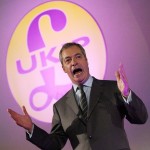
2) The EU-withdrawalist UK Independence Party has announced that it favours a ban on the burka. This despite UKIP long having portrayed itself as a more or less libertarian party.

Libertarians are a hugely over-represented breed among the political blogosphere. There’s hundreds of them, on both sides of the Atlantic – but in real world politics there’s barely a handful, and they rarely even retain their deposits in elections. They are, however, so vocal on the web that few online political discussions can pass without a libertarian of some stripe cropping up to make their case. As such, libertarian arguments increasinly need to be addressed, even while libertarianism remains decidedly fringe.

The prime unifying belief that they share is that individual liberty is paramount, and that the role of the state should be kept as minimal as feasibly possible. A libertarian, as a rule, opposes bans and restrictions – taking John Stuart Mill’s laudable harm principle as the starting point for pretty much all their approaches to the world, but taking this idea far further than Mill himself (or his fellow small-”L” liberals) ever did.

The libertarian argument against European integration in general – and the European Union specifically – is usually that it implies the imposition of a new layer of government above the national. As libertarians believe small government to be the best form, this is an understandable approach. After all, if you already have a national ministry dealing with policy area X, where’s the need for an additional European-level administration which deals with the same area?

What happens next, however, is that the majority of libertarians seem to take this entirely reasonable argument against the repetition/overlap of governmental/administrative layers, and from it extrapolate that it is the super-national, European-level layer of government/administration which is the unnecessary one.

If the smallest amount of governmental/state interference in the life of the individual – and the maximum level of individual liberty – is the key aim, then surely it is the *national* layer which is superfluous?

If we agree that there are a few basic fundamentals for individual liberty – the right to trial, to vote, to be free from persecution, to free speech, etc. etc. (read Mill and the US declaration of independence for more) – then why, in the case of the EU, have these asserted 27 times in 27 countries, when once should be enough?

If we agree, as most libertarians do, that some laws and regulations are necessary for the smooth functioning of society – agreed systems of weights and measures (to prevent fraud), some level of health and safety guarantees, product standards, environmental/pollution restrictions (all taking Mill’s dictum that as individuals we shouldn’t harm others and applying it to corporations and government bodies), etc. etc. – why have 27 different variants of these laws and regulations, when what’s good for one of us is surely good for all?

This is the fundamental reason why libertarians should be in favour of European integration (note: not necessarily the current nature of European integration or current European bodies, both EU and non-EU, but the general principle) – for an individual in country X to have to abide by different laws than an individual in country Y implies a strong likelihood that the two are experiencing different levels of individual freedom. Plus, most importantly, if individual X goes to country Y, then he/she will have to abide by country Y’s laws – a potential restriction on that individual’s liberty of movement. (Case study: In Germany and Austria, it is illegal to deny the Holocaust; it is not in the UK. When British citizen David Irving went to Austria, having denied the Holocaust, he was arrested and imprisoned.)

Of course, restricting this to a mere continent (and not even all of that) is not ideal. The true libertarian would agree that liberty is universal – for true liberty to exist, what applies to one individual should apply to us all – and therefore we should be pushing for world government, where everyone on the planet has the same rights as everyone else.

But this still doesn’t take away from the fact that if you want small government for maximum individual liberty, the higher the level at which the basic laws and regulations are imposed, the better. Universal is the ideal (hence the UN’s Universal Declaration of Human Rights), but if that proves impossible for now then you surely go for as broad an area as you can? The best part of a continent is not a bad starting point, and is certainly better than a mere individual country. Especially when, as the European Court of Human Rights ruling demonstrates, individual countries cannot be relied upon to safeguard the liberties of their citizens.

I have long stated this to be one of my prime motivations for supporting European integration: the ability of super-national bodies to restrict the power that nation states can hold over the individual. Case in point: if you are British, you have obligations but few rights – we remain, technically, subjects, not citizens. As I have argued before (in some detail), it was only with the introduction of EU citizenship that

“for the first time in Britain’s history, British citizens/subjects have the right to vote, to free movement, and so on, rather than just the privilege – we are no longer dependant upon the whim of parliament.”

And yet still we find self-professed libertarians clinging to the old, liberty-restricting national apparatus, rather than the new, liberty-granting super-national bodies of the EU and Council of Europe. Supposedly state-hating libertarians who cling to the state.

It genuinely baffles me. Can any libertarian provide me with a libertarian case for this apparent nationalism? Because the way I see it, nationalism and libertarianism are mutually exclusive – one being a collective idea focussed around the concept of a geographically and legally-restrictive state, the other focussed around the ideas of individualism and freedom.

Comments (41)

Looking back (and forward)

Posted on 02 January 2010 by nosemonkey

A new year, and we should be looking to the future. I’ve also (appropriately) been looking to the past, though, and pondering how little has changed.

Five years ago: Complaining about the nature of the EU debate and lengthy attempts to explain why the EU is not becoming a superstate (perennial and never-ending discussions, these – the latter covered in five lengthy parts last year: one, two, three, four, five)

Four years ago: Boredom with the EU constitution – which has since, of course, morphed into boredom with the Lisbon Treaty (over which we’re still having arguments, even though it’s now been passed…)

Three years ago: An attempt to explain my political outlook, having caused yet more confusion by not seeming to fall neatly into any of the usual categories, and not being overly consistent in approach. (Something that cropped up yet again just the other day.)

Two years ago: A decision to blog less often, in more depth (which I’ve stuck to more or less, more from laziness and boredom than concerted effort). A possible hint of the growing boredom.

One year ago: Some advice for new bloggers, which all still stands. Trying to pass the baton on to a new breed? Another expression of boredom with the whole thing? Quite possibly.

We now have a new decade, and a slightly reshaped EU – though so little has changed, I have no doubts that all the same arguments will continue. Because the same concerns that faced the EU at the start of the last decade continue to worry at the start of this one: How to reshape the Common Agricultural and Common Fisheries Policies? Which of the near neighbours are going to be allowed to join the EU club, and when? How to deal with Russia? What is the EU’s role in the world? And – most importantly – what is the EU for?

I have a strange feeling I’ll be discussing the same old stuff in another five, ten years, and that we’ll hardly have moved on at all. And in any case, as I noted last year, I’m interested in politics, but I don’t CARE about politics. At the moment, there’s very little to interest me.

So, is there *anything* interesting to look forward to, or is this going to be the third January in a row (and the fifth out of the last six) where I enter the new year largely disillusioned with the principle subject of this blog?

Comments (16)

Why regulating and legislating at an EU level is almost always a good thing

Posted on 23 December 2009 by nosemonkey

Just to be provocative, like (I obviously don’t entirely believe this headline – I’m a big fan of the subsidiarity principle, after all, and am an advocate of greater localism in politics – but still)… This taken from a reply to a comment on my last post.

First point, worth repeating constantly:

“The EU” doesn’t tell ANY member state what to do. Because “the EU” IS those member states.

If “the EU” introduces new legislation, and the UK has to adopt that legislation, this is ONLY because the UK has already agreed that this legislation is a good idea.

On every substantive issue – even after Lisbon – member states retain vetoes. All major decisions are confirmed either in the European Council or the Council of the European Union – which are made up by the heads and ministers of the governments of the member states.

So instead of “the EU tells”, a more honest phrase would be “the governments of the EU member states agree”.

And then, on to why EU-level legislation and regulation is a good thing.

EU legislation and regulations do affect a sizable chunk of everyday life. And a good thing too – for wherever you have one bit of EU legislation or one EU regulation, that means that you are saving millions of pounds/euros/dollars across the continent – which no matter how much you think the UK economy is reliant on the EU can only be a good thing, because all savings mean the European economy will be healthier.

Why does EU legislation = savings? Because for ANY regulation or legislation to come into force at EU level necessarily implies that ALL 27 member states have agreed that this legislation/regulation is necessary.

It’s not an immense leap of logic to therefore suggest that all 27 member states may well have introduced such legislation/regulations at a national level. And this would cost money in each member state, as each government works out what it wants to do entirely independently, each civil service checks the practicalities and costs entirley independently, and each country implements the legislation/regulation entirely independently. And this would necessarily lead to subtle variations between the legislation/regulations member state to member state.

By doing it at an EU level, the member states can pool their resources to cut down on research costs prior to passing the legislation/regulation, and also ensure harmonisation – increasing ease of trade between member states (as manufacturers don’t have to produce 27 subtly different versions of the same product to comply with 27 different national rulebooks).

All of this leads to savings – both in terms of bureaucratic costs at a national level, and in terms of economic efficiency.

So EU legislation/regulation is, as a general rule, a good thing.

There are of course examples of bad EU legislation and bad EU regulations, but as member states are generally given a good deal of flexibility on the implementation – while still having to stick to the general principle that they’ve all agreed at EU level – there are normally ways to get around it. This flexibility also allows member states to adapt EU rules to fit their own local needs, while still maintaining pan-EU harmony and the consequent efficiency savings – that’s the whole point.

Comments (33)

The US State Department on the Lisbon Treaty

Posted on 16 December 2009 by nosemonkey

We’ve seen all the intra-European arguments about Lisbon (now in force for a full fortnight) – what we really need is some expert extra-European opinion. So ta very much to Philip H Gordon, Assistant Secretary, Bureau of European and Eurasian Affairs at the US State Department, for his handy overview.

Key points?

- “the role of Member States in decision-making is undiminished”

- “The treaty… allows for some EU states which are at the forefront of defense cooperation to pursue greater harmonization of their defense apparatus without the limitations of those states who do not wish to participate

- “the Lisbon Treaty represents a serious effort by our EU partners to streamline their policymaking process. We understand that, as with all efforts to reform complex institutions, this is a work in progress, and that it may take time for the new institutions to demonstrate their impact. Nevertheless, we hope that the changes brought by Lisbon will make the EU a stronger partner for the United States, and increase the role of Europe on the world’s stage. We want the EU to be that stronger partner and we certainly intend to do our part to engage closely with the new institutions, but in the end their ultimate effectiveness will be determined by the will of EU Member States to invest in them.”

Well would you look at that? The United States doesn’t seem to think that Lisbon has brought about a superstate (as some of our more hysterical anti-EU friends seem to believe), but rather that it continues to allow EU member states a great deal of individual power and flexibility. And the United States also seems to believe that – as its supporters have consistently maintained – the Lisbon Treaty is primarily aimed at streamlining the union’s working methods.

Oh, and just to add to what anyone with half a brain and the ability to read has been saying about the thing, Assistant Secretary Gordon also notes the increased powers that are going to the European Parliament – that’d be the increased democracy bit that we’ve been going on about for the last few years.

So, what’s the conspiracy that explains the US State Department echoing the EU’s own line on Lisbon – a line that’s supposedly dishonest propaganda designed to hide the true sinister intent of the treaty? Anyone?

(Sorry for the blogging silence here of late, by the way – very, very busy for the last few weeks…)

Comments (20)

Nine years ago…

Posted on 05 November 2009 by nosemonkey

Apropos of not a lot, now that the Treaty of Lisbon’s all over, what was being said when the similarly disputed and unsatisfactory Treaty of Nice was finally passed back in 2001?

From The Economist, Vol. 360, Issue 8232 (28th July 2001):

Nice is complex and difficult to understand; in future, the EU must do better in explaining its workings to a European public that seems to be simultaneously bored and irritated by the Union.

Sound familiar?

Comments (2)

“No one under the age of 52 has had the chance to vote on the EU”

Posted on 04 November 2009 by nosemonkey

So runs the argument of increasingly prominent anti-EU Tory, Daniel Hannan MEP – still advocating a UK referendum despite the final ratification of the Lisbon Treaty.

This is, of course, very true. Since the 1975 referendum on EEC membership, the British people haven’t had their chance to vote on being part of the EU system.

But when was the vote on constitutional monarchy, an established Church, Cabinet government, a two-chamber parliament, parliamentary sovereignty, a supreme court, the first past the post voting system, our membership of NATO, the UN, the WTO, etc. etc. etc.?

Why the insistence on a public say in one (really rather small) part of the UK’s governance, but not all the rest?

Why the complaints about the unelected European Commission, but no murmurs of dissent about how no one in the Cabinet is elected to that post? (Not to mention the UK civil service…)

Why the complaints about lack of democracy in the EU when the House of Lords remains unelected?

Why the complaints about EU law when most domestic legislation is passed via statutory instruments without so much as a glance from an elected official?

Why the hysteria over the largely powerless Presidency of the European Council, when Her Majesty the Queen retains the right to dissolve parliament and veto any legislation, whenever she likes?

How about, in other words, we put our own house in order before preaching about governmental perfection – and how about we stop with the double-standards? Want the people to have a say in how they’re governed? Fine. Let’s give them a say in all the other areas as well.

But don’t abuse referenda – generally reserved purely for extraordinary constitutional changes – for party political purposes. That way lies the destruction of the very system of government that the EU’s British opponents profess to hold so dear.

Comments (54)

Liveblogging the Lisbon apocalypse

Posted on 03 November 2009 by nosemonkey

With Vaclav Klaus’ low-key signature this afternoon, the Lisbon Treaty – which its critics have long accused of being capable of altering the very fabric of European life – has been ratified. I was in London, reporting the reactions live on Twitter as the news of the signing spread. First update c.3:15pm UK time, last c.6pm:

Right. So Lisbon’s signed. I await the end of the nation state (as warned of by some of its madder opponents) with positive glee.

If I got the anti-Lisbon memo right, we now all have to have abortions and join the army as well. Are the queues already forming?

Christ – these post-Lisbon laser-tattooed barcodes they’re forcing us to have burned onto our foreheads don’t half smart…

Christ – I work near Buckingham Palace. EU warplanes have just nuked it! Curse that Lisbon Treaty! I had it all wrong… Forgive me…

German soldiers are goose-stepping around St James’s Park! The EU flag is flying from the House of Commons. Woe! Woe! All is lost!

Morris dancers are being rounded up and shot. All bananas are being forcibly straightened. My blog has been taken over by a Romanian. Woe!

I’m afraid that post-Lisbon Brussels has decreed my name too anglocentric. I shall henceforward be known as Herr Nariz-m?rka?is.

Still, at least there’s one thing the anti-Lisbon lot can cheer – at least Gordon Brown’s no longer in charge of the country, eh?

RT @thejimsmith @Nosemonkey Have your pounds turned to ashes in your pockets? Mine have.

RT @duckorange The Royal crest on my passport has completely burned away, just like what God did to that crate in Raiders of the Lost Ark

Michael Stipe is singing about how he feels fine from the smoking crater of the palace. Surviving patriots are pelting him with rubble.

Just spotted Nigel Farage run past, shouting “I told you so” – then the dogs got him. Their blue collars with yellow stars were very dapper.

RT @duckorange And, incredibly, post-Lisbon Treaty, Nick Griffin now leads the European International Party. He is – however – still a twat

RT @thejimsmith @Nosemonkey Waterloo Station has just disappeared of the Tube map! It’s been replaced by one called Arcole!

RT @thejimsmith @Nosemonkey I no longer understand Imperial measurements! This pint glass has shrunk to a half litre IN MY HAND!

Is it just me, or are the skies getting darker even as I type? Lisbon’s evil stretches to the very heavens! [c.5pm]

And when Vaclav Klaus had signed the seventh EU treaty, there was silence in heaven about the space of half an hour…

And I saw the seven treaties which stood before Brussels; and to them were given seven trumpets…

And another angel came and stood at the altar, having a golden censer; and there was given unto him much incense…

See? It was all there, if only we had bothered to look – even down to Tony B-liar becoming President of the EU with his incense and stuff!

RT @duckorange @Nosemonkey Post Lisbon Treaty – Just seen a foreign chappie hammering all the bananas flat in Budgens. We’re DOOMED!

A priest has just come into the office and forcibly converted us all to Catholicism. Except the Muslims, getting special treatment AS ALWAYS

One committed Anglican protested. They crucified him on an EU flag. Oh the humanity!

Breaking, from the City of London: British Airways now called European Airways. British Gas, however, now known as Russian Gas…

British Telecom is now owned by Orange. Thanks to Gordon Brown and his recession, there were no other British companies left.

Jutland Square (formerly Trafalgar Square) to host compulsary Lisbon celebrations tonight. Non-attendance means death.

RT @nickjbarlow @Nosemonkey And no excuse for not getting there now that the trains are running on time. [Curse those efficient Italians!]

In (European) Parliament Square, Churchill’s statue is being pulled down and replaced with one of Jean Monnet.

RT @thejimsmith @Nosemonkey They’re painting EU stars on the London Eye so they can blink sinisterly at the mother of parliaments!

RT @thejimsmith @Nosemonkey They’ve pulled down Pitt’s statue and replaced him with Konrad Adenauer. Roy Jenkins’ ghost is gloating at him.

Looks like the news about Lisbon has spread – across London, people are streaming out of offices and rushing to be with their loved ones… [c.6pm]

Hearing Claude Levi-Strauss has died, just before his 101st birthday. Was probably the shock of Lisbon… [c.7:30pm]

Comments (8)

Guest Post: Chris Patten for ‘EU Foreign Minister’?

Posted on 02 November 2009 by nosemonkey

A guest post from that rare beast, an openly pro-EU Tory – in this case Thomas Byrne of the blog Byrne Tofferings, who is keen to sound out the thoughts of a more international audience to his suggestion for the first High Representative of the Union for Foreign Affairs and Security Policy, the successor to the High Representative for the Common Foreign and Security Policy (currently Javier Solana):

Chris Patten has signalled his interest in the High Representative for the Common Foreign and Security Policy position, something I’m going to give my support to.

If you want to look at important conflicts that Britain has been involved with since the EU’s foundation – Falklands, Kosovo, Gulf War, Iraq, Afghanistan, etc. the EU has actively or passively opposed every one, Chris Patten would be the perfect man for turning EU Foreign Policy into a force to be reckoned with.

Chris Patten was the first Governor who actually cared about trying to bring democracy to Hong Kong. Unlike most of his predecessor(s) who were ’sinologists,’ which meant they just kowtowed to Peking, he actually stood up for Hong Kong.

Patten’s experience would be useful in the Balkans – Bosnia, Serbia, Croatia, Macedonia, Albania, Kosovo, Moldova – and Turkey, all of which are pushing for EU membership to a greater or lesser extent. Not to mention some of the Caucasian and Central Asian countries that are members of the Council of Europe, and could down the line become candidate countries – or the elephant in the European room that is Belarus, the last dictatorship on the continent.

In Chris Patten’s book (Not Quite The Diplomat) he suggests the Tories have saddled themselves with a Eurosceptic ideology for no good reason, something that I’d agree with, his Europhile sentiment and his experience within the commission make him the perfect man to slide into this role. Firstly ,because of his experience of EU institutions and dealings with each of the member states, but also when the Tories come into government they’ll be dealing with someone they can relate to, lending a plaster to the Eurosceptic position of some MEP’s like Daniel Hannan, and the grassroots and lead the Conservative party into a position within Europe that would silence those that claim the party are on the fringe.

Comments (5)

The European Council, the Council of the European Union, the Council of Ministers and the Council of Europe: A guide

Posted on 30 October 2009 by nosemonkey

Yes, it’s confusing. Too many Councils, all something to do with Europe. I get that it’s hard to keep track of them all – hell, I get confused myself sometimes.

But – and this is an important but – when the media is discussing these things, it should get them right. All too often, the media gets them muddled up and seems to have little understanding of where the distinctions lie, which does what, and where the sensible comparisons are.

The Council of Europe

It’s been around the longest, so you’d think people would understand it by now. It is not part of the EU – though every EU member state is also a member of the Council of Europe.

Founded in 1949, the Council of Europe focussed on fostering democracy, human rights and the rule of law. It has 47 member states (20 more than the EU) – and most often makes the news when its main court, the European Court of Human Rights (note: not an EU institution – that’s the European Court of Justice, and yes, that just adds to the confusion) features in a high-profile case.

The Council of Europe has a Secretary General, but not a President. It also – like the EU – has a Parliamentary Assembly which, unlike the European Parliament, is not directly elected, but is made up of members of the parliaments of its member states, their numbers (similarly to the European Parliament) based upon the population of the member state in question. The Council of Europe also – to add to the confusion – has a Congress, as well as a Committee of Ministers and a Commissioner for Human Rights (the European Union does *not* have a Commissioner for Human Rights).

The European Council

This is the body over which all the fuss is currently taking place, as under the Lisbon Treaty the European Council is to gain a President for the first time (although – as noted here recently – this position has very limited powers). It is not an official EU institution – yet is part of the EU. (Told you it was confusing…) It will only become an official EU institution after the Lisbon Treaty is ratified, though its role and powers will barely change.

The European Council is made up of the heads of government of the 27 EU member states, plus the President of the European Commission (and so, to some extent, it already has a president…) but – important to note, considering all the fuss that’s being made over its president – has no formal legilsative or executive powers. It only meets four times a year – twice at the headquarters of the Council of the European Union (to add to the confusion) and twice in the country of the member state that holds the Presidency of the Council of the European Union (yet more confusion) – in what are informally known as EU Summits. These started on an informal basis back in the early 1960s, first became formalised in the 1970s, and were included in an EU treaty for the first time in the 1987 Single European Act, and only gained a defined role with the 1992 Maastricht Treaty.

The European Council is – unsurprisingly, as it’s a formal meeting of the heads of government of the EU member states – the body that “provide[s] the Union with the necessary impetus for its development”, by allowing the heads of the member states to agree broad policy objectives for the Union to focus on. It has also adopted some of the higher-level powers of the Council of the European Union, such as the appointment of the President of the European Commission – again, because it is made up of the heads of government of the member states, and so it makes sense for these things to be discussed in the European Council (as the governments of the member states can veto candidates for the Commission Presidency, as well as other proposed EU legislation, it’s eminently sensible for them to try and agree a shared agenda before everyone starts work on pushing through candidates or policies).

Because of these powers – again, to stress, simply a natural offshoot of the European Council being made up of the heads of government of the member states – it can be seen as one of the EU’s most powerful bodies, despite not being an official EU institution. Some have compared it to the British Cabinet – though, as it meets only four times a year and tends to focus on broad, general policy objectives rather than specifics, this is being rather generous.

The proposed President of the European Council, therefore, will chair only four meetings a year, and act as a formal middle-man for the governments of the member states. He or she may well be able to propose solutions, suggest focuses for EU policy, and lend the EU a guiding hand, but – and this is a very important but – the President of the European Council will have practically no formal powers, and the job is very poorly-defined. He or she can suggest and try to persuade – but the final decisions will still be taken by the heads of government of the EU member states who make up the European Council, not by the person they have appointed (for just a two and a half year term, lest we forget) to help them reach agreement. It is an important position that will require a great deal of skilfull diplomacy, but it is not powerful one.

The Council of the European Union

This is the primary decision-making institution within the EU. The Council of the European Union is the same thing as the Council of Ministers. The latter is an informal name that was no doubt originally intended to prevent confusion with the European Council – but has only added to it. To make matters worse, it’s also sometimes referred to as the Consilium.

The members of the Council of the European Union are the 27 government ministers of the EU member states for the relevant topic under discussion. If Agriculture, then the Agriculture ministers. If Finance, the Finance ministers, and so on. (The Council of Europe’s Committee of Ministers, by contrast, is made up solely of the Foreign ministers of the Council of Europe’s member states, or their representatives.)

Because of the subject-specific, ministerial-level debates that take place at the Council of the European Union, it can be seen as the EU’s principle decision-making body – and can in some cases overrule the European Parliament (though under the codecision procedure, unanimity between the two bodies is usually required). It is here that EU policy is most often determined.

The Council of the European Union also – like the European Commission, and like the European Council will soon – has a President. This is the six-month rotating “EU presidency” (as it is often informally known), that flits from member state to member state in an order that’s about as clear as mud, but no doubt makes sense to somebody. However, just to confuse matters een further, the actual position of President shifts throughout these six-month presidencies, depending on the topic being discussed. If it’s Agriculture, then the Agriculture minister from the member state that holds the Presidency of the Council of the European Union is, for that session, the President. If Finance, the Finance minister, and so on.

This rotating Presidency of the Council of the European Union will continue after Lisbon’s ratification, and will exist alongside – not be replaced by – the Presidency of the European Council.

The Council of the European Union also – just to make matters even more confusing – has a General Secretary, who sits for a five-year term to help co-ordinate policy between the rotating presidencies and ensure some kind of continuity. The position was founded in 1999, and is currently held by Javier Solana, who is at the same time the High Representative for the Common Foreign and Security Policy. After the Lisbon Treaty comes in, the latter part of Solan’s current job is to be separated out, merged with the European Commissioner for External Relations, become known as the High Representative of the Union for Foreign Affairs and Security Policy – in which capacity whoever gets the gig will chair any Council of the European Union discussions on foreign affairs.

If you want comparisons to national governments, the Council is the closest the EU has to a Cabinet, as the power of executive formally lies with the Council of the European Union. However, the Cabinet analogy isn’t entirely right, because the Council also acts as the second (upper) chamber of the EU legislature – like the US Senate or UK House of Lords.

What this basically means is that the Council of the European Union is where most decisions get made – albeit after being pointed in the right direction by the European Council. Were Lisbon introducing a permanent President of the Council of the European Union, rather than of the European Council, then it would indeed be a position with the potential to wield a hell of a lot of power.

But it isn’t. So there’s no point getting all het up about it.

The quick version

Council of Europe
Not an EU body; concerned with democracy and justice

Council of the European Union
At once the EU’s Cabinet and Upper House of the legislature; where the decisions are made

Council of Ministers
The same as the Council of the European Union

European Council
The heads of government of the EU member states; an EU body but not an EU institution; effectively just a formalised old-school international summit, like the G8 or G20

Comments (11)

First Europe, then… the world?

Posted on 27 October 2009 by nosemonkey

A few vague thoughts towards predicting a new global geopolitics:

Globalisation has been the undeniable trend of the last half century.

As transportation and communication technologies have advanced, the world has got smaller. You can now get from London to Australia in a day where, two hundred years ago – at the height of the nation state – it would have taken several times that to travel from London to Edinburgh. A century ago, most goods in your local shop would have been local to your (more or less) immediate area – even with the expansion of 19th century Empires and the arrival in Europe of affordably-priced exotic fruits and out-of-season vegetables, delivered via early refrigerated ships. Now we have to go to specialist shops to get local produce – and local today often means little more than “from the same country”. As for the interconnectedness of the global economy, we have had the ultimate proof over the last year as recession has spread around the world.

Communities arise due to a combination of proximity and common interest – the latter more often than not following the former.

Up until the dawn of the steam age, most modern nation states were highly fragmented, with much autonomy among the further-flung regions. The steam train – and later, the telegraph – enabled more effective administration over longer distances, and so nation states became more coherent as entities.

The proximity of most peoples on Earth has, over the last half century – since the advent of the Jet engine and, more recently, the virtual proximity made possible by the internet – likewise become ever closer. The ability to administrate over far larger areas has similarly increased. Where two centuries ago – as the French national identity was beginning to solidify post-Revolution and under the auspices of Napoleon – it would have taken a week to travel from Paris to Marseilles, there is now nowhere on Earth that you cannot get to in a week, no matter your starting point. Two centuries ago it took six days to travel from London to Edinburgh; a century ago it took six hours; now you can get from London to New York in six hours.

At the same time, with the globalisation of the world economy, previously disparate communities – separated by many hundreds of miles as well as by language and culture – are now economically interconnected via the a combination of the complexities of global finance and the fact that their local shops are full of goods from other countries.

New technologies lead to new identities.

It is possible over the last few centuries to demonstrate that advances in travel and communication technologies have led to consolidation and centralisation of governance structures, as it has become ever easier to manage large areas from a central capital. At the same time, shared identities have arisen, as previously disparate communities (sometimes nominally already under the same administration, but usually for all practical purposes largely independent of each other) have suddenly found themselves in the same boat. Scottish and Cornish become British; Normans and Savoyards become French; Milanese and Sicilians become Italians. Old identities are retained, but the new proximity provided by innovative technologies allows a top-down governmental and bottom-up social coming together.

The EU was, at its birth, backward-looking – yet accidentally stumbled upon an idea far ahead of its time.

The EEC was formed in the 1950s not as a reaction to new technology, but as a means of preventing the violence that so often ensued from the clashing interests of nation states. It was the dawn of the jet age, the year (1957) that Sputnik’s launch heralded the even more advanced era of the space age – yet the advances in transportation and communication that the jet engine and satellite were in the process of bringing about were barely on the radar of the EU’s founding fathers.

Nonetheless, the coming together of the previously competing states of a continent to pursue shared interests was to be made far easier by these new technologies. In 1920, to travel from London to Athens took days. By 1960 it was a matter of hours. Europe had shrunk. The EEC was formed just on the cusp of this new shrinkage, and so was in an ideal position to capitalise on the possibilities that the new technologies provided.

Approaching the present.

With the arrival of the internet, the world has shrunk yet again – only this time only socially/culturally, as we can chat away to people of any nation from the comfort of our front rooms. But as long as the physical transportation of goods over the internet remains impossible, for physical commerce we remain reliant on 20th (and even 19th) century technologies.

This places a geographical limit on effective economic interaction – at least when it comes to the exchange of day-to-day goods. If it takes more than a few hours to transport your goods from A to B it’s usually more trouble than it’s worth, especially with rising fuel prices. Large organisations may be able to trade over far larger distances – using economies of scale to make sending a refrigerated container ship packed with New Zealand lamb halfway round the globe make financial sense – but for the small business (as most businesses are), local trade remains the most effective. The arrival of the railway and the aeroplane expanded the geographical limits of the small business’s economic potential, but we have yet to advance much beyond these limits, set now for more than half a century.

The geographical limitations of (economic) communities.

In practical terms, if a journey of more than a few hours is too long to be economically viable for small businesses, then the geographical limit of most small businesses is more or less continental. At the same time, the EU has done a good job of continuing the work of postwar reconstruction and improving Europe’s transportation and communications infrastructure, ensuring that the EU area is one of the most effectively interconnected on earth – rivalled only by the United States of America, which has the added advantage of a) having been a coherent nation state for 90 years before the EEC came into being, and b) working with a pretty much blank canvas.

But this is a minor issue – there is a far more compelling reason why socio-economic communities today still have geographical limits: time zones. It may well be possible to travel to the west coast of America in half a day, and to speak to someone in Los Angeles, Seattle or San Francisco at any time. But we still cannot get over the fact that there is an eight hour time difference between London and LA.

With office hours generally running from 9am to 6pm, we have a nine-hour window for normal economic activity. Working with a company on America’s east coast while based in London is feasible – the five-hour time difference allows a four-hour overlap, with the Americans starting work around 2pm London time – but working with a company based in Seattle presents problems, with only a one-hour shared office window. For effective working, you need to be able to communicate with colleagues pretty much all the time – losing more than about four hours every day from the nine hour working day will lead to growing inefficiencies. The technology exists to communicate with people on the other side of the world – but the fact remains that when you contact them, they may well be asleep.*

The continental United States is spread over four timezones. From the Atlantic to the Urals, Europe is also spread over four timezones. The same goes for Latin America. Africa is spread over five. Asia and Australasia are rather more spread out – yet if you take South East Asia through to eastern Australia, the time difference is only four hours again, yet covers Australia, Japan, the Phillippines, Indonesia, Thailand and most of China.

These are, geographically-speaking, all entirely practical economic units. Any small businessman on the east coast of America can easily trade with one on the west without needing anything much in the way of complicated planning. A shopkeeper in Portugal can phone a supplier in Turkey, and know he will be able to sort out his orders that same day – possibly even take delivery the same day, if he phones in the morning. But for someone in London to order a vital part from Japan, there remain serious practical difficulties – the nine-hour time difference compounded by a 12-hour flight time. By the time the Japanese supplier has got the message and sent the part, two days might well have passed – which in business terms can prove disastrous.

Today.

So now, by accident at least as much as design, Europe (or, at least, Western Europe) is, in terms of its infrastructure and and geography, about as coherent and sensible a socio-economic unit as most nation states were two centuries ago, before the arrival of the railways and telegraph – if not more so.

Having been working on coming together for longer than other parts of the world, the EU’s institutions, procedures and structures are further advanced. Yet they were not originally planned with the aim of taking advantage of new technologies – but of preventing the conflicts of earlier ages. The overriding feature of the way the EU currently works is the perennial clash between the institutional attempts to find compromises between conflicting national interests (the need for unanimity on substantial changes), and structural fluff designed to flatter the national egos (the hang-on of old school diplomacy that is the veto).

The big fear of the old developed (national) economies over the last decade has been the rise of the new economies of China, India and – to a lesser extent – Brazil. These nationally-focussed concerns have been passed on to the EU – the organisation’s member states have been trying to use the EU as a way of maintaining strength through numbers against the newcomers on the global scene. Technology has allowed for greater pooling of resources and more efficient ways of working, enabling the EU’s member states to maintain the hope that they can compete against the vast potential of India and China – a potential based largely upon those two countries’ huge populations and geographical areas, which on both counts rival those of continents.

Looking to a continental future?

Yet now there are signs of yet more new developments. In the last couple of weeks, two potentially hugely significant events took place – both of which took their inspiration from the European Union, and both of which recognise that continental-scale organisation (or, at least, organisation across several – but not more than four or five – timezones) is both desirable and practical.

First, in Latin America, the members of the Bolivarian Alliance for the Americas (ALBA) decided to adopt a single currency – the SUCRE – explicitly modelled upon the euro. (And before you dismiss ALBA as made up of piddlingly insignificant countries, let’s not forget that the EU started out with just six member states, all still recovering from a devastating war, and three of which were tiny. Let’s also not forget ALBA’s more significant neighbours, who will be watching developments with interest.)

This was swiftly followed by fresh moves by the Association of Southeast Asian Nations (ASEAN) to create a regional bloc – including an EU-style common market and, potentially, a euro-style single currency.

Yes, ASEAN can also be dismissed as being made up of a bunch of relative lightweights – its most significant members probably being Indonesia, Singapore and Thailand, hardly global major players. But this new move shows far greater ambition – having been proposed by Japan, backed by China, and potentially including Australia, New Zealand and even the United States down the line. Any economic bloc including China and Japan among its members is a force to be reckoned with.

A new age?

And so we may be on the cusp of a major shift in global geopolitics and the structuring of the global economy. If these two new continental blocs get off the ground, the EU will have continental competitors for the first time. And the member states of the EU, until now using the benefits of membership to give themselves an economic advantage on the world stage, will find it even harder to compete as individuals.

Of course, timezone practicalities as well as national egos could still prevent the ASEAN plan from ever coing to fruition, but even a smaller-scale version of an Asia-Pacific version of the European Union would herald a major shift in the way the world works.

The upshot? The EU could well be about to shift from being a nice idea to being an absolute necessity.

* Yes, larger organisations can work on a 24-hour basis – but most businesses are not larger organisations. And for an economic community to benefit the most people within it, its advantages must be accessible to everyone without having to stay up all night.

Comments (6)

On “the President of Europe”

Posted on 25 October 2009 by nosemonkey

The proposed President of the European Council is very far from being “President of Europe” – either in terms of profile or power.

Whoever lands the job (and it’s highly unlikely to be Tony Blair) will have practically zero influence on anything, acting instead as little more than a moderator between the governments of the member states as they continue to run the EU show. And will be in office for just two and a half years – which is no time at all in EU terms (hell, it’s just taken more than a decade to get agreement on a treaty which doesn’t solve half the problems it was meant to…)

Meanwhile the rotating EU Presidency – the Presidency of the Council of the European Union – will continue as usual (currently Sweden, with Spain taking over on January 1st), ensuring that the President of the European Council can constantly be outshone by whoever holds the more established rotating presidency. Because the rotating presidency still has the ability to influence the EU’s focus for the six months that each member state holds it – whereas the President of the European Council will have *no* formal powers whatsoever, and remains hugely ill-defined.

And that’s before you note that the President of the European Council’s role, as vaguely as it has been described, also overlaps with that of the far better-established Presidency of the European Commission (currently Jose Manuel Barroso) and the EU High Representative (currently Javier Solana). A brand new two and a half year office versus two existing five-year offices? I know which ones I’m betting on to have the real power here.

In other words, it really doesn’t matter who gets the gig. It’s not important in the slightest. It’s a meaningless position.

I do get that it’s confusing to have a (proposed) President of the European Council AND a President of the Council of the European Union (not to mention the Council of Europe), but come on – the significance of this is being blown out of all proportion.

(Originally posted as a comment to this article over at the Guardian)

Comments (19)

Hire Nosemonkey!


MORE EUROBLOGS:
EU Blog Directory | Bloggingportal.eu

Must-read EU blogs | More EU blogs
Politician blogs | Press/Think tank blogs
Subject specialists | The East | The West
New blogroll additions

Like this blog? Why not show a little PayPal love and help keep it going?

Donate in Euros:

Donate in GBP:

Advertisement

Read reviews of Lipozene and other new weight loss products!