Exclusive: The danger of Jean Monnet

Posted on 20 March 2009 by nosemonkey

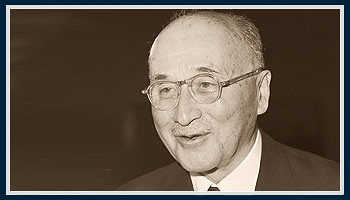
Jean MonnetFor as long as there have been eurosceptics, there have been arguments that the EEC/EU is part of a grand plan to create a United States of Europe. Why? Well, largely thanks to the dreams of some of the organisation’s founding fathers (from a generation, it should be noted, which had mostly lived through two world wars – but still…)

The founding father most often brought up in this context is Jean Monnet, the first Deputy Secretary General of the interwar League of Nations, and one of the key figures in organising Allied supply-lines in both world wars (not to mention the Chinese railway system, bizarrely). Now, however, he is most often remembered as a key eurosceptic bogeyman for his postwar efforts to bring Europe together – and most notably mentioned in tandem with his 1943 statement of belief:

“There will be no peace in Europe, if the states are reconstituted on the basis of national sovereignty… The countries of Europe are too small to guarantee their peoples the necessary prosperity and social development. The European states must constitute themselves into a federation.”

Ah, the F-word… Federalism to a eurosceptic is like the proverbial red rag to a bull (despite the key attribute of a federation being, erm… the self-governing nature of the component states, with the central federal government’s powers often being highly limited – but sssh!)

The other favourite Monnet quote, of course, is that about “the superstate”:

“Europe’s nations should be guided towards the superstate without their people understanding what is happening. This can be accomplished by successive steps, each disguised as having an economic purpose but which will irreversibly lead to federation.”

Ah! See the devious nature of the European elites, trying to guide us without our knowledge down a path we haven’t been consulted on! How dare they! (The fact that this quote is an entirely made-up load of old bollocks that Monnet never actually said or wrote is neither here nor there… If you repeat something often enough then it becomes true – or at least true enough to enable a justification of the ongoing belief in the veracity of the idea behind the belief…)

Perhaps because many British eurosceptics take a decidedly whiggish view of history – a teleological approach to the world that often also tends towards great man theory, in which providence and inevitability are seen in just about everything (and the Norman Conquest somehow marked the start of 1,000 years of English independence – despite it only being 944 years, despite the royal family being French Vikings from 1066, becoming Welsh in 1485, Scottish in 1603, despite the successful Dutch invasion of 1688, and despite our royal family having been German since 1714) – the fact that Monnet helped set up what was to become the EU more than half a century ago means, of course, that the EU is still headed down the path that he envisaged for it. Despite the fact that he died 30 years ago this week, and the EU is an entirely different beast to anything he had planned for the thing. (Hell – Monnet was a highly effective and efficient organiser, for starters. There’s no way he’d have come up with something as chaotic and inefficient as the current EU system…)

Anyway, even though the “Jean Monnet said it so it must be true” line of argument of the eurosceptic types convinced that the superstate is the EU’s final destination is utterly thwarted by the fact that a) Monnet didn’t actually say most of the things they attribute to him, and b) the fact that if a week is a long time in politics then half a century is an eon… Even though all these assumptions and beliefs about the much-misunderstood and mis-remembered Monnet can be shown to be based on nothing more than personal political prejudice, I can now exclusively reveal that we now have proof that Monnet is indeed a danger.

Related posts:

12 Comments For This Post

    1
  1. french derek Says:

    I haven’t laughed so much about EU matters ever before. Great stuff!

  2. 2
  3. Vicente de Lisboa Says:

    Was all that just to prop up the pun?

    …well kudos if it was. It worked.

  4. 3
  5. Ralf Grahn Says:

    Naturally Monnet, who had excellent relations with the US and the UK, and wanted Britain to join the ECSC and the EEC, was dangerous for those who wanted the UK to stay out. As you say, he seems to serve the purposes of secessionists long after his death.

    Surely, De Gaulle is their hero, nationalistic to the hilt, twice stopping cold Britain’s pleading to enter (membership only after his death), and paralysing the functioning of the EEC for a long time.

    Instead of bogeymen like Monnet, the anti-Europeans need ‘positive’ role models for ‘freely cooperating nation-states’. De Gaulle is the answer.

  6. 4
  7. Eurocentric Says:

    I wait for the day that Cameron declares himself a Gaullist.

  8. 5
  9. Devil's Kitchen Says:

    I see that, on the subject of the false Monnet quote, Richard Corbett quotes a paragraph from a real Monnet speech.

    On the other hand, they have sent me a real speech by Jean Monnet, delivered on the 28th March 1953 to the parliamentary assembly of the Council of Europe, in which he said precisely the opposite -

    “Our Community will only develop well if all the measures that it takes are made public, explained publicly not only to the peoples of our Community but also to those who do not belong to it”

    How right you are: if transparency and openness was, indeed, Monnet’s opinion, this EU – an organisation more corrupt and secretive than the majority of the constituent governments – is certainly not driven by his vision…

    DK

  10. 6
  11. Martin Meenagh Says:

    I think sometimes that people conflate Robert Schumann–who was a Lorrainer, and a Catholic for a large European quasi-republic which would be achieved by degrees, with Monnet, who was largely for a series of transparent communities. The English also tend to misunderstand the strain of Catholic thinking associated with the likes of Jacques Maritain that produced the continental vision of human rights, different from that of Macmillan and others at the 1949 Conference that the British claimed for themselves. I also take your point about Britain as a compound, Austro-Hungarian style state; that was presumably why the only European Churchill ever deferred to at table, by legend, was Otto Von hapsburg, who supported Schumann and Monnet for his own reasons.

    I think English-speaking people ignore the catholic philosophy, play up the functionalism, and impose American and liberal versions of federal republicanism on the whole debate. The result of mixing the three lenses is that everything goes dark.

    Sorry for the long comment, your article interested me.

  12. 7
  13. Barroso Says:

    You know, I prefer to call it an empire. The euroskeptics love my use of that term and my efficiency, modesty and lack of arrogance. I think I have won many of them over in my term in office with these qualities.

    http://www.youtube.com/watch?v=c2Ralocq9uE

  14. 8
  15. bert Says:

    “I think English-speaking people ignore the catholic philosophy, play up the functionalism, and impose American and liberal versions of federal republicanism on the whole debate.”

    Monnet had the Battle Hymn of the Republic played at his funeral. The assembled European machers didn’t know what to make of it.

  16. 9
  17. Martin Meenagh Says:

    Haha Bert, I’m not so sure most Americans know what to make of it. I didn’t know that.

  18. 10
  19. bert Says:

    It’s from the Duchene biography.
    Which also makes a big deal of him coming from a cognac family in cognac country – away from Paris, looking out at the Atlantic, dependent on trade with international and especially Anglo-Saxon markets.
    Of course when you described Schuman’s background, you’re rightly pointing out that it wasn’t a Monnet-only show.

  20. 11
  21. Martin Meenagh Says:

    The sections in Alan Fimister’s work on Schumann dealing with the lengths Schumann went to to get the coal and steel community established are almost comic. Schumann viewed the years since Napoleon in terms of France trying to get its hands on the Saarland and a frontier on the Rhine. He thought that any state that could would be the Great Power of Europe, and the world–a bit like Norman Stone’s quip that ‘Russia plus a Ukraine is an America’. So, he submitted a draft to the French PM when he was too tired to read it; got Adenauer to pre-emptively approve it; encouraged a pointless ‘Atlantic Council’ discussion at cabinet to divert everyone, made the coal and steel community a technical proposal before lunch then announced it to masses of press just after dessert. Priceless.

    Schumann hadn’t been an ardent european before world war two; he was a Christian Democrat who thought that the church should give up the legacy of the Holy Roman Empire, and of a ralliement to the Third Republic, and instead embrace the idea of Christian, pan-European republics held in community. He didn’t think republics had to give up monarchs, either.

    One thing I do think agrees with what I suppose was your American point, Bert, was that Schumann also got Dean Acheson to approve the idea, and to keep it silent from Ernie Bevin. The latter (a good hater) never forgave Acheson for it. Acheson’s comment to Schumann–which may have been a diplomatic observation, as it were–was that Europe had been in decline since the reformation, in cultural terms, and needed to come together again. It was such a strange thing for an Anglophile American to say, but flattered a Lorrainer, I guess.

  22. 12
  23. garfy Says:

    everybody should read – “faits et chroniques interdits au public” by. Pierre de Villemarest;

10 Trackbacks For This Post

  1. Quoting Monnet | eurealist.co.uk Says:

    [...] theme has recently been advanced again by Clive Mathews and this time he uses the hook of the above Monnet`s misquote, which it is claimed allows Euro [...]

  2. Why EU superstate conspiracy theories are nonsense | Nosemonkey’s EUtopia Says:

    [...] joky post on the “danger” of EU founding father Jean Monnet prompted a response from the usually well-intentioned and often thought-provoking eurosceptic Ken [...]

  3. Four points and a question for eurosceptics who believe in the advancing EU superstate | Nosemonkey’s EUtopia Says:

    [...] so let’s keep at it. Some very good discussion is still raging away in the comments to my Jean Monnet and EU superstate posts, and Ken’s come back with a new post at EU Realist, at which [...]

  4. Nosemonkey » Blog Archive » Why EU superstate conspiracy theories are nonsense Says:

    [...] Posted by nosemonkey on 26/03/09 My jokey post on the “danger” of EU founding father Jean Monnet prompted a response from the usually well-intentioned and often thought-provoking eurosceptic Ken [...]

  5. Nosemonkey » Blog Archive » Four points and a question for eurosceptics who believe in the advancing EU superstate Says:

    [...] one, so let’s keep at it. Some very good discussion is still raging away in the comments to my Jean Monnet and EU superstate posts, and Ken’s come back with a new post at EU Realist, at which I’ve just [...]

  6. Models for an EU superstate? | Nosemonkey’s EUtopia Says:

    [...] The danger of Jean Monnet – Why EU superstate conspiracy theories are nonsense – Four points and a question for eurosceptics [...]

  7. Nosemonkey » Blog Archive » Models for an EU superstate? Says:

    [...] Posted by nosemonkey on 07/04/09 For those coming in late, the superstate series so far: – The danger of Jean Monnet – Why EU superstate conspiracy theories are nonsense – Four points and a question for eurosceptics [...]

  8. EUs Blog: “EU Ikke Ægte Demokrati Men Et Bureaukrati” » Euro-med Says:

    [...] halsen ved fejlcitering af St. Jean Monnet af beskidte propagandagrunde: "Der bliver ikke fred i Europa, hvis staterne rekonstitueres på grundlag af den nationale suverænitet … De [...]

  9. EU´s Blog: “EU No Genuine Democracy - But A Bureaucracy” » Euro-med Says:

    [...] it all wrong by misquoting St. Jean Monnet for dirty propagandistic reasons: “There will be no peace in Europe, if the states are reconstituted on the basis of national sovereignty… …The European [...]

  10. EUs Blog: “EU Keine Echte Demokratie - Sondern Eine Bürokratie” » Euro-med Says:

    [...] bekommen haben – und zwar aus schmutzigen Propaganda-Gründen: "Es wird keinen Frieden in Europa geben, wenn die Staaten wieder auf der Grundlage der nationalen Souveränität konstituiert [...]

Hire Nosemonkey!


MORE EUROBLOGS:
EU Blog Directory | Bloggingportal.eu

Must-read EU blogs | More EU blogs
Politician blogs | Press/Think tank blogs
Subject specialists | The East | The West
New blogroll additions

Like this blog? Why not show a little PayPal love and help keep it going?

Donate in Euros:

Donate in GBP:

Advertisement

Read reviews of Organic Liaison and other new weight loss products!