This post, over at my new place, pretty much sums it up. Warning – long…
November 19, 2016
by Nosemonkey
Comments Off on What I’ve been thinking about since the Brexit referendum (and Trump’s election)

November 19, 2016
by Nosemonkey
Comments Off on What I’ve been thinking about since the Brexit referendum (and Trump’s election)
This post, over at my new place, pretty much sums it up. Warning – long…
November 16, 2016
by Nosemonkey
Comments Off on If anyone’s still paying any attention – new blog
You may be interested in a new blog I’ve set up – partly to play with Medium, partly to order my own thoughts post-Brexit and post-Trump.
Yes, it’s a bit political. And it may evolve into something else – because I’m all too aware after wasting a decade trying to convince British people that the EU’s actually not terrible just how useless blogs can be.
So, please welcome PostEuropean.com to the web. Let me know what you think.
December 11, 2015
by Nosemonkey
10 Comments
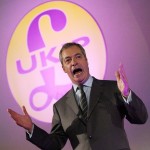
Yesterday I returned from work to find an anti-EU leaflet on the doorstep.
So you can imagine my surprise to find it was covered in an array of spurious bullshit.
Let’s take a look, “point” by “point”:

1) EU cost.
Covered so many times this is just lazy – another deliberate misrepresentation by focusing on gross rather than net contributions from the anti-EU crowd.
This is a matter of public record, FFS – easy to check. Madly easy to check. See, for instance, the House of Commons Library’s EU Budget 2014-2020, published last month, with figures back to 2008, and projected to 2020. Net contributions?
2014: £9.1 billion
2015: £10.4 billion
2016: £9.5 billion
2017: £8.3 billion
etc.
A lot of money, yes. But in context?
EU membership costs about 1.3% of the 2015 UK budget, or about 0.3% of UK GDP.
Big numbers mean nothing without context. In context, this big number is a little number.
And in any case, why focus on cost? What about value?Well, because working out a cost-benefit analysis of the EU is basically impossible. It’s all just, like, your opinion, man.
2) Financial Incompetence
Again, all it takes is a quick visit to the search engine of your choice to see that this myth has been debunked over and over and over and over and over and over and… You get the picture.
Have the EU accounts been signed off? Yes. Every year.
Are they perfect? No – and neither would yours be if you delegated spending to hundreds of thousands of people across 28 countries without having the funds for inspectors to check that they’re spending them properly.
3) EU Corruption
Another old favourite, though the £6 billion figure is rather higher than I’d heard before. Maybe I’ve not been paying attention.
What they mean is not that the funds went “missing”, but that they were “misspent”.
This is not just semiotics. While the EU institutions are certainly not totally corruption free, they’re hardly dens of iniquity.
“Misspent” simply means that these funds were used for purposes other than those intended, usually by local and national authorities. Because that’s how the EU works: pretty much everything “the EU” does is executed at a national or local level, overseen by national and local politicians and civil servants.
In short, this is the same as the second complaint.
More importantly, this isn’t just taxpayers’ money going into corrupt pockets, but (mostly) into the wrong public projects.
Ideal? Of course not. But certainly not missing. They know where it went – and often go there to get it back.
4) Uncontrolled Borders
Sod the sub-claims about unemployment, wages and homelessness (also bollocks, but I’ve already spent too long on this to go into them – suffice to say that immigration has been shown to have a positive net economic benefit) – the core claim is bollocks.
The UK is not part of the Schengen Area. This means we still have control of our borders, as everyone who’s ever gone through the irritating border checks on the Eurostar can tell you.
5) Loss of Sovereignty
Wow. Someone’s still using the 70% of laws claim? That’s such total bullshit I’ll simply link to one of my greatest hits of 2009: What percentage of laws come from the EU?
(Hint: It’s not 70%. Hell, even fervent europhobe Christopher Booker agrees with my conclusion, from earlier this year)
6) EU Undemocratic
*YAWN*
Why is it that every time anyone British complains about the EU’s democratic deficit they seem unable to realise how undemocratic the UK is? The complaint here is especially dumb – individual MPs in the Commons have no power to initiate UK law either, except in extremely rare cases that are usually tightly controlled by the government. Much as with EU law, where the “unelected bureaucrats” of the Commission will pretty much only ever initiate laws after they’ve had the nod from the (elected) member state governments – who have usually had their civil servants draft the things, because the Commission doesn’t have enough staff to draft all that legislation (the classic comparison being that the Commission employs fewer people than Birmingham City Council – probably still more or less accurate).
This also reminds me of this old chestnut from 2005 – The European Commission: More Democratic than the US Presidency. Democracy is a strange beast – you’ll often find that the closer you look at it, the less democratic it appears… (And yes, I have written on The Failures of EU Democracy too, plus on the EU’s (real) democratic deficit, and why it’s a good thing – as well as calling for fundamental EU democratic reform.)
7) Euro Currency Fiasco
They may, finally, have a point here – if they hadn’t thrown in the “KEEP THE POUND” all caps nonsense. That battle’s long been won – by Gordon Brown and his five economic tests. I haven’t heard any mainstream politician advocate joining the eurozone since way before the crisis kicked off.
8) Better to Leave
Ah… Switzerland and Norway. Perennial Utopias for the anti-EU crowd.
First, have a gander at 2011’s Why Leaving the EU for the EEA or EFTA Will Not Solve Any of the Anti-EU Crowd’s Complaints.
Then take a look at the “the UK will be able to trade freely with the whole world” argument.
Then, let’s turn the leaflet over:

“The EU is constantly negotiating free trade agreements” – which are apparently a bad thing when the EU does it, but brilliant when Britain does it.
As for the idea of a “Global Union” – I’d be all for that, as I wrote back in 2008.
So what have we learned?
This leaflet was not by UKIP, but the British Democrats – possibly related to the BNP spin-off the British Democratic Party, possibly (but unlikely) the “Home Rule for England” English Democrats. I don’t know, and frankly don’t care – call them Veritas, call them the Referendum Party, call them Libertas.
They’re all basically the same, these anti-EU groups: Passionate believers in their cause, but with barely a verifiable, properly cited fact between them, and usually hooked on a deep misunderstanding of how the Britain they profess to love works – either now, under the evil EU, or back in the glory days of pre-EEC freedom.
As Jon Worth has written, rebutting anti-EU myths is futile – but not just because it allows them to set the terms of the debate, and amplifies their lies by constant repetition. It’s because it’s really not hard to find out the truth – but they have no interest in the truth.
On blogging
The web today is orders of magnitude bigger than it was back in 2003, when I started this blog. You have access to information I could only dream of back then – reams of data, all streamed to your phone faster than 2003 me could have dreamed of. Governments have digitised almost everything you could want to look up. Think tanks and even parts of the press are writing considered, well-researched pieces about the EU, and putting them online for free for everyone to read.
When I started this place, it was in response to a frustrated need – for more information about and explanation of the European Union and what it was up to in the run-up to the 2004 expansion. Check the oldest archives, you’ll see I soon gave up for several months – there simply weren’t the raw materials available online. I went off and read some paper-based books and magazines instead.
Now, nearly 13 years on, we’re approaching another crunch point for the EU and for Britain, with the fatuous UK referendum.
And where, back in 2003, there was nothing being said, today, as we approach 2016, there’s nothing new to say. All the arguments have been made. All the rebuttals have been written. All anyone needs to do to find a fact or an explanation is type into a search box and hit enter.
But they don’t. Because their minds are already made up. And neither you nor I are going to change them, no matter how wrong they may be.
And so instead, this place is an archive for search engines. For the tiny few who seek out answers. And I hope it helps them. But I very much doubt you’ll see me writing any more about the EU on here. Twitter, perhaps – but certainly not at any length. It’s pointless.
I started blogging because I wanted to learn something new. I stopped because I was simply rehashing old ground, time and again, in response to people who had no interest in persuading or being persuaded, just in arguing.
Sod that.
Will I start blogging again? Possibly. But I want to find something to excite me again. To teach me something new. And that’s not the EU.
April 14, 2014
by Nosemonkey
22 Comments
An email comes in – I thought I may as well turn the response into a post:
“I’m a journalism student working on an article about British press coverage of the EU. I’m particularly interested in the spiral of scant EU coverage creating reader apathy, and public disinterest then discouraging editors from spending much energy on Europe.
“I’m an admirer of your Nosemonkey blog, and was re-reading your post from April 2008 when you say the press are to blame for Britain’s increasingly eurosceptic nature, both through lack of coverage and the dominance of eurosceptic editorial policies.
“I would love to know how you see press influence playing out ahead of the possible referendum on the UK’s place in Europe next year, and whether you think the BBC has become more balanced since the independent review of its coverage.”
For want of time I won’t try and tackle the whole issue – books have been written on media agendas and media bias. Instead let’s hone in on the “balance” angle…
There’s a fundamental problem the BBC has when it comes to its interpretation of balance that’s distorting the debate, and that has infected much of the rest of the British press: the artificial black and white eurosceptic vs europhile divide, and the peculiarly British definition of euroscepticism.
By British standards, UKIP are eurosceptics: in the British debate, being actively, vocally opposed to the EU and calling for its abolition is considered scepticism.
But scepticism isn’t opposition, it’s doubt. Uncertainty. As such, by European standards, *I’m* a eurosceptic, because I’m critical of aspects of the EU where warranted, and (despite thinking that, in general, the EU is a good thing) tend to doubt the value and sense of many of its projects and approaches. I’ve been anti-EU in the past, and could see myself becoming opposed to it again if it doesn’t sort out some of its shit in a timely and sensible manner.
This continental understanding of euroscepticism does not apply in the UK, where I’d be considered a europhile by many, purely for not actively wanting the abolition of the EU and having occasionally been known to say nice things about the general concept.
This concept that you’re either a eurosceptic or a europhile is an invention of the eurosceptics. It’s a fallacy. A nonsense. An obvious nonsense. Yet one that has infected every aspect of EU-related reporting and discussion in the British media.
Even when the terms “eurosceptic” and “europhile” aren’t explicitly used, the debate is still framed in those terms – that there are only two options: you’re either in favour of the EU or you’re opposed. There is no room allowed for shades of grey – nor for acknowledging that the EU itself is not a monolithic entity, so approaches to it shouldn’t be either.
Because of this very British confusion over terminology (not just confined to the term eurosceptic, but also to the much simpler concept of federalism – which in the British sense is used to mean the opposite of what it actually means when mentioned in the context of the EU), when pursuing balance, the BBC has a serious problem.
The BBC is charged with being balanced in *all* its political coverage. As such, it tends to look for opposites – Labour vs Conservative, Left vs Right, etc. – based on precisely this assumption there are two sides to every argument.
Historically, this has often been more or less true, and so has more or less worked. It’s only in recent years, with the onset of the Coalition, that they’ve started to realise that sometimes politics is a little more complex than that – and they haven’t yet worked out how to respond. (How do you treat the Lib Dems, who are part of the government yet sometimes critical of the government? Give them their own seat? But then the government may have two representatives to the opposition’s one. Is there an opposition equivalent to the Lib Dems? UKIP would claim they are – but they have no MPs, so they aren’t comparable. All the other parties are far too small or (like the SNP or Plaid Cymru) too regional.)
When it comes to the EU, the BBC has had this problem for years, and has made little effort to even acknowledge the issue: instead it still tends to treat everything as for or against, ask on hard anti-EU voices (easy to find), and then hunt around for someone to represent the opposite side and act as defenders of the EU.
However, there are few true opposites that the BBC and others can call on to achieve “balance” to UKIP in its EU debates – I’ve only ever met one person I’d class as a europhile true believer in over a decade writing about this stuff, and the pro-EU movements in the UK have been notoriously poorly organised for decades, and unable to mobilise to improve their media representation as a result. (Related: there are also few truly hardcore anti-EU voices – or, at least, few that their respective organisations are happy to have going on TV to represent them – which both is why Nigel Farage is on telly so often.)
I still maintain that no one with any better-than-average knowledge of the EU – yes, even employees of the EU institutions – can be fully uncritical of the thing. In fact, employees of the European institutions are often among the most critical people you will meet – because they know the little inefficiencies and frustrations from bitter, daily personal experience.
So, with such a lack of true EU believers, how can you get balance against someone like Nigel Farage – who not only wants the UK to leave the EU, but has also called for the EU to be abolished for every other country as well? You can’t – you have to make do with someone who, like me, reckons that on balance the EU is better than the alternative, and persuade them to go up against true believer anti-EU voices while being presented as some kind of foaming-at-the-mouth europhile.
But these people aren’t europhiles. They are critical. This means that when an anti-EU voice presented as a sceptic attacks the EU and has a valid point somewhere in their argument, the “opposing” pundit will tend to follow this entirely reasonable formula for a UK EU debate response: “yes, there is some ground for criticism, but…” – as a result of which, whenever anyone anti-EU appears on the BBC, the anti-EU pundits continually score micro-points, merely by dint of the fact that their supposed opponents are usually relatively reasonable.
The added problem is that as most anti-EU attacks are based on some small grain of truth, usually blown out of all proportion, most EU debates in the British media follow the general line of anti-EU assertion -> attempt at explanation of why this is wrong -> further anti-EU assertion -> further attempt at explanation of why this is wrong.
This means the “pro-EU” side is almost always on the back foot, trying to counter assertion with fact – and explanations and facts are fundamentally boring.
Why would anyone sane volunteer for one of these debates? They’re no win situations – as the recent Clegg-Farage debates appear to have proved.
And then we have the other problem – again amply illustrated by the Clegg-Farage debates: if the “pro” side goes on the attack, the anti side can always fall back on a few last-ditch responses that play well to their base, like “no matter what the truth is, why is this being decided in Brussels rather than Britain?” – which would again lead to a necessarily long, complicated and boring explanation about the merits of intergovernmental and supranational cooperation that either turns off the audience or sends them to sleep.
This is why every post-debate poll showed an overwhelming win to Farage – Clegg may have been speaking truth, but truth is boring, and the anti- crowd have the perfect fall-back every time.
So, there’s no balance because there is no pro-EU equivalent of the anti-EU campaigners. But there’s also another, more fundamental reason: Balance implies that all views are represented – yet increasingly the panellists tend to the extremes. This is very far from representative. Why? Because most British people don’t really have much of an opinion about the EU, with repeated opinion polls rank it as a low priority. Most people float somewhere in the centre – not liking some things about the EU, but appreciating others (even if they don’t always realise that the things they’re appreciating stem from the EU – but that’s another matter entirely…)
Don’t believe me? How else do you explain the consistently low (and falling) turnout at European Parliament elections, and continued failure of anti-EU parties like UKIP to win any MPs in general elections? The public either don’t care at all, or don’t care enough to allow the EU to alter their voting choices except in elections – be they Council or European – where they don’t see the outcome as really mattering.
A more balanced, representative debate would therefore involve a panel made up of something like the following:
– an anti-EU UKIP type
– an EU institutional spokesperson to give the official line
– a knowledgeable yet critical commentator in favour of major EU reform sitting alongside
– someone going “meh, who cares – can’t we talk about something important instead?”
March 1, 2014
by Nosemonkey
2 Comments
Putin’s willy-waving shows his failure – Russia is not an attractive option. He can only win friends by force. This is a sign of weakness, not strength. Good piece, worth a read.
March 1, 2014
by Nosemonkey
2 Comments
Good stuff. Only thing I’d add is a general attack on a whole load of journalists and news organisations who should have known better than to repeat unverified information and allegations from blatantly biased sources (on both sides) in an incredibly opaque, constanfly-shifting situation while the “OMG RUSSIA’S INVADED IT’S LIKE HUNGARY / CZECHOSLOVAKIA / GEORGIA ALL OVER AGAIN COLD WAR OMG!! 11!!111!!!” hysteria was going on yesterday.
Not that I expect today to be much better, but maybe the lack of a new Iron Curtain springing up ovefnight may calm a few of them down a little. As a journalist myself, it was embarrassing to watch. Credulous nonsense, interpersed with ignorant speculation.
February 7, 2014
by Nosemonkey
3 Comments
The ruling – which happened only in the last few minutes – likely means that, until the European Court of Justice has made a final ruling (which could take months/years), the European Central Bank will be prevented from bailing out ailing sovereign bonds in EU member states – this OMT (“Outright Monetary Transactions“) policy being one of the key factors in the recent improvements in Eurozone stability.
There are a number of other potential medium-long-term implications, so expect much debate in the coming hours/days.
One of the most interesting, though, is this – pointed out on Twitter by Shahin Vallée, economic adviser to Herman van Rompuy:
“Karlsruhe admits incompetences to judge compliance to EU treaty and establishes superiority of EU law over German one”
Meanwhile, others are speculating that the decision to refer to the ECJ will likely necessitate a future treaty change to increase the ECB’s ability to act.
All that is certain is that, for now, the spectre of Eurozone economic uncertainty has come back – and we don’t know how long for. It could be a matter of months, years – or just minutes, if someone in a position of sufficient authority is able to calm the markets with a clear enough vision of what’s next.
All I know is that I’m going to be keeping a close eye on my Europe Opinion Twitter list today, with the other eye on the markets, to see how jittery they get.
January 24, 2014
by Nosemonkey
12 Comments
I mean yes, we know that in this era of coalitions and compromise, manifesto pledges are not what they once were. But it’s often in the details that you can get a proper grasp of what a party truly stands for, as well as how serious they are.
This is an especially vital issue for parties that have never held office, and so have no real track record.
In the last UK general election, I was torn between four parties – the Lib Dems, Greens, Tories and Labour all had something major I could agree with, some major things I disagreed with. Hell, I could find something to agree about in the manifestos of all parties – yes, including UKIP (support for pubs and the beer trade) and including the BNP (they may be vile racists, but they had a smattering of economic policies that weren’t totally insane, probably a Mosleyite legacy).
So now that UKIP has disowned its entire 2010 manifesto and Nigel Farage has openly stated that his party won’t issue a new one ahead of May’s European Parliament elections, where does this leave prospective UKIP voters?
OK, so we know they don’t like the EU and want to leave, but what alternative do they propose? What steps will they take in the meantime to work to lessen the malicious impact of Brussels? Which policy areas in particular do they see as most pernicious? Will they do anything active to reform the EU institutions and laws they see as most harmful to the UK? To flesh out partnerships and deals with other European parties to gain favourable terms and conditions for their proposed Brexit? What do they see as the key battleground issues? Where do they see potential for cross-party support?
Or are they merely saying “elect us to the Brussels gravy train we profess to hate so much, and trust us”? Because if so, their MEPs’ track records don’t offer up much cause for UKIP supporters to give them that trust.
In the current EP term they’ve seen multiple defections and suspensions, just as they did in the previous one, and the roll call of UKIP MEPs isn’t an especially auspicious one – 6 of the 13 UKIP MEPs who were elected in 2009 have since fallen out with the party for various reasons, including former EU whistleblower Marta Andreasen, the only one they had who it was possible to respect. In the previous parliament it was much the same story – remember Robert Killroy-Silk‘s challenge for the leadership and then setting up of the short-lived rival Veritas, or the conviction of UKIP MEP Ashley Mote for benefit fraud?
And that’s not to mention their dire attendance records.
All that said, Farage is entirely right to ditch UKIP’s 2010 manifesto, because it was packed full of the kinds of bizarre policies you’d expect from a joke group, not a serious us contender. Not to mention the unpleasant anti-Muslim tone that permeated the thing under the temporary leadership of Lord Pearson, a man who seemed even more of a caricature than Farage himself – only in Pearson’s case, an infinitely less likeable caricature.
However, while scrapping stupid policies is to be welcomed, not committing to replacements is nothing short of dishonest, especially after the various UKIP controversies of recent years, from homophobic election leaflets to racist rants about Nelson Mandela to “send the lot back” anti-immigration comments, to blaming floods on gays, to burka bans to banning teaching about climate change in schools, to incredibly vague tax policies.
It’s entirely possible UKIP supporters want these all to be party policy. It’s entirely possible they’re planning to vote UKIP because they think they still are, or will be again. It’s quite possible they see UKIP merely as a protest vote and don’t really care what their policies are.
The only thing that is certain is that it’s entirely dishonest of the party leadership not to come clean about which policies it is and is not committed to fighting for. And with so many policy flip-flops, how long until they change their minds again?
We know roughly what UKIP is against (even if the details are vague), but what is it actually for?
January 23, 2014
by Nosemonkey
9 Comments
The pictures coming out of Kiev yesterday (decent galley here) gave me – and no doubt plenty of others – a bit of a flashback to November/December 2004’s Orange Revolution.
The riots are in protest against the same president and for the same broad cause – disagreement over Ukraine’s place in the world, caught between East and West in the no-man’s land on the European fringe, with a history of repeated conquest and occupation, be it by Russians, Nazis, Ottomans, Huns, or (more happily) the good old Polish-Lithuanian Commonwealth.
The Orange Revolution was the moment I first really began to see the power of the internet to keep me informed when the regular news media was doing a terrible job. It was the moment I fell in live with the power of blogs and bloggers – individuals with an interest keen to share their knowledge and thoughts – to debunk falsehoods spread for whatever reason.
Yes, the bloggers got plenty wrong too (me included, see below), but we seemed far faster to acknowledge our mistakes – even in those glorious days before Twitter and Facebook made instant communication so much easier. These conversations were carried out via comment boxes and the then all-new technology of the trackback (then largely a deliberate, manual process).
Here are the posts from my multi-day liveblog from the Orange Revolution, the titles alone giving you an idea of just how ignorant we all were as events kicked off:
Breaking news: Military-backed coup in the Ukraine
Ukraine crisis continued: revolution of invasion?
Ukraine crisis continued – violence approaching?
Ukraine crisis continued – international solution?
Ukraine crisis continued – any solution?
Ukraine crisis continued – detente?
Ukraine crisis continued – room for hope
Ukraine crisis continued – one week on
Then, as now, the Western media’s knowledge of Ukraine was sorely lacking, and this in turn meant that we were all equally ignorant – until the internet kicked in and suddenly allowed us to connect with people from all over the world who knew far more than us.
You can clearly see this process in effect if you read those posts. I start off ignorantly calling the country “the Ukraine” and forgetting that the world had changed a lot in the decade since the fall of the USSR. Then I moved away from the standard media to hunt down fellow bloggers, and the posts change radically. Behind the scenes of these posts, on sites now mostly long defunct, I found myself chatting with people in buildings overlooking Maidan Square, giving live, eyewitness accounts of riot police movements; I found people to explain the complex politics and history of the country with humour and nuance, even as Ukraine seemed about to tear itself apart; in just a few days, I was up to speed on the background and subtleties of the situation in a way impossible to glean from the space-constrained world of newspapers; and as I educated myself, I compiled all the information I found into that series of posts.
These days, it’d be deemed either liveblogging or realtime curation; back then, neither of those terms existed.
In any case, Ukraine’s Orange Revolution was the moment I decided that the internet was the future of news. It was the moment I decided I wanted to move from print to digital.
Almost a decade on, as Ukraine erupts again, I have no regrets – though I do have plenty of disappointments.
The main differences in mainstream coverage of the 2014 protests seems to be that this time the photos are better, and the videos appearing faster. They are still pretty much unanimously being described as pro-EU, even after having gone on for months, which while partially true is still a huge oversimplification.
Meanwhile, in 2014 the presence of Twitter – which I still adore as a tool for rapid information gathering and dissemination – has vastly increased the network of available independent voices to follow from at the scene. But it’s also proportionately reduced more detailed, considered analysis and explanation from these same independent voices.
This time around, there seem to be fewer informed English language bloggers covering events than there were in 2004. The media has stepped into this gap instead, but in a way that has barely evolved from what I was doing in 2004 – if anything, it’s regressed, because most of these seem to consist of little more than retweeting/reblogging people on a webpage for news site readers too lazy to go to Twitter or Tumblr or Instagram for themselves.
140 characters is not enough. Tumblr is not enough. Proper, independent, journalistic, long-form blogs seem to have died out. There seem to be fewer blogs now than there were in 2004, and in the tedious terms of the old blogs vs the mainstream media debates that we all got so fed up with back in the day (“will blogs kill newspapers?”, etc), it’s the mainstream media that seems to have won the day.
Only the fight’s left them weakened. The mainstream has taken on the blogs’ speed, but they’ve also adopted their amateurishness. And they still seem happy to oversimplify while still not taking advantage of the fact that online there is no wordcount: you can happily write long and take time to go in depth. But no one can be bothered – amateurs or professionals. Our attention spans have been shortened, and most people will be happy with a mere slideshow of burning streets, masked men, and riot police.
The revolution will be televised – but in a live stream with no context or information, making it impossible to tell what’s going on, who’s who, or what it’s all about.
This sort of coverage is useless.
(But hey – today’s Thursday. Maybe this week’s Economist will restore my faith in the press.)
January 22, 2014
by Nosemonkey
4 Comments
In an EU election year, the current polutics of France is always an important factor in predicting the futre makeup of the European Parliament. Not only is France one of the largest countries, so with one of the largest delegations of MEPs (meaning its politicians quite often can dominate, or at least strongly influence, the two big political groups, the PES on the left and EPP on the right) but it also has always has a special place in the EU’s makeup.
Yet these days, French politics is nearly as confusing to the outsider as Italy’s – presidential affairs, socialist splits, Sarkozy sort of retirements, popular movements on the far-left and far right, etc etc etc.
And all that’s not to mention the flaky French economy and apparently rising discontent at the state of the world among the population at large. Anti-EU feeling in France has boomed over the last few years.
As such, this overview of the current political of affairs in France, with a particular focus on the Front National, is very welcome indeed.
January 21, 2014
by Nosemonkey
2 Comments
It’s an important question in a European Parliament election year – especially one where many seem to be planning on punishing the EU for the perceived failures of its leadership and conception during the Eurocrisis (even though, y’know, the European Parliament has had little to no involvement in setting policy in this area) – and most people seem to think they know the answer, and that it is along fhe lines of “extremely negatively”.
In reality? This is all quite confusing and rather more complex.
Still, this from Menzie Chinn of the University of Wisconsin (and former adviser to President Bush Jr) is worth a look as an introduction to some of the latest thinking (even if I can’t pretend to have understood it all…) – Euro and Non-Euro Countries and Fiscal Policy
Most interesting are the handy comparative charts – one including Eurozone countries, one excluding them. Though these are not as easy to interpret as they may appear ar first glance, because “clearly, other factors than fiscal policy can affect output” – something many commentators and politicians have seemed to forget over the last few years in their drives for easy answers that appeal to their core audience.
(Apologies for linking to something that contains the phrase “highly endogenous to the change in the numerator” this early in the morning…)
January 20, 2014
by Nosemonkey
27 Comments
No matter your political persuasion, this is not as easy a decision as you may think. I supposedly know my stuff on this, and I haven’t decided yet.
To answer this question, we need to ask how does the European Parliament work – because surely you want your vote to have an impact, or you’d join the vast majority of people who simply don’t bother turning out on European election days? And how can you ensure it is going to have the impact you want if you don’t know a few basics about the potential influence that an MEP can have?
So, you probably all know that the EP can’t initiate legislation. Your local MEP will not be able to introduce a bill to create a new law or to call for an existing one to be repealed.
But this doesn’t mean that MEPs are powerless, because the EP’s primary purpose is to scrutinise, amend and reject legislation that has been initiated elsewhere. The EP is not meant to be a power-hungry maniac, issuing new laws to look busy – it’s meant to be a place of considered analysis and quality control.
So, if you don’t like meddling Eurocrats issuing edicts and red tape, it’s not enough to vote for someone who thinks the same way – you also need to make sure you’re voting for someone who’s going to get actively involved in stopping/amending them, and raising support to get more MEPs banding together in support of the cause.
Of course, voting on legislation isn’t the only way to have influence here – there are plenty of behind the scenes factors too, from committee work to general lobbying of the Commission, Council and member states to nudge legislation in the right direction before it even reaches the European Parliament. You could even argue that getting coverage in the national press about particular pieces of legislation is an important part of this, as a public uproar over a proposed EU law can put pressure on the EU to think again.
But when it comes to the crunch, if an MEP doesn’t vote when a vote is being held, all the behind the scenes stuff and public PR work is likely to come to nothing.
You can check the voting records of existing MEPs via VoteWatch Europe, which has a handy section showing you how often your MEP turns up to vote, as well as which way they swing.
Here we can see that the UK’s most active MEP is Conservative Charles Tannock, who’s participated in 96% of all EP votes, has made an astonishing 427 motions for resolutions (the most of any MEP Europe-wide), made 586 speeches before parliament, amended 59 reports (vital work in shaping EU policy), and tabled 589 parliamentary questions (the 19th most active MEP Europe-wide in this area). He’s also a member of the Foreign Affairs and Human Rights committees, helping shape opinion and policy in those areas, and is also a subsitute on the Security and Defence Committee.
Round of applause for Charles Tannock, whether you agree with his views or not! (He’s on Twitter here.)
You don’t have to be a supporter of their parties to see that these are dedicated, highly active politicians, and that anyone who voted for them should feel well pleased with the result.
By contrast, the UK’s least active MEP is UKIP’s controversial comedy caricature, Godfrey Bloom, who’s only bothered to turn up to 29% of votes, table 34 questions, make 56 speeches (surprising for a man who likes the sound of his own voice so much), and amend 6 reports. So much for defending British interests…
A strong showing from UKIP and the Conservatives there. So if you happen to be of a eurosceptic bent, you may want to consider – are these people, coming as they do from two of the UK’s more eurosceptic parties – really doing the best to represent your (and the country’s) best interests?
For those interested, the least active MEPs in other parties:
Note: the latter has the excuse of being Vice-President of the EP, and so is unable to vote all the time as a result of these duties (which arguably considerably increase his influence). The next lowest-attending Lib Dem MEP is Catherine Bearder (South East England), on a respectable 85% attendance.
So, step one: check which constituency you’re in, and who your current MEPs are – these are multi-member constituencies, so you will have more than one MEP. And no, I can’t name all of the ones for my constituency either.
Step two: Check their vote attendance and activity. Are there any that don’t deserve your vote because they can’t be bothered to vote themselves?
Part 2: How to work out which policy issues actually matter in European Parliament elections, and so which party is the best fit for your worldview.
Part 3: How to understand how European Parliament political groups will affect the effectiveness of your chosen party/candidate once they’re elected.
Part 4: How to work out how to reward deserving MEPs / candidates and how to cast an effective protest or tactical vote (including via the insanity of the UK’s insane EP electoral system).
(If I can dig out a reliable list of current MEP expenses claims, I’ll also have a post on current MEPs by value for money…)
January 9, 2014
by Nosemonkey
Comments Off on Britain: Hiding under a duvet of doubt and debt
Genuinely superb column by Mary Riddell in the Telegraph today. Read in full. Considering the Telegraph’s decades of hostility to the EU (it’s the paper that employs the hard anti-EU Tory Tea Partier Dan Hannan, after all, and owners the Barclay brothers have been linked by some reports to UKIP), the tone and argument is little short of astonishing.
Highlights:
“Britain – so recently the buccaneer of the world – has become insular to the point of agoraphobia. Recession and hardship at home have made the UK a nation of political navel-gazers…
“inward-looking politics are bolstering, rather than reducing, Britain’s identity crisis. With power ebbing away abroad and the spectre of Scottish independence at home, Britons are wondering: who are we?
“… The immigrant has become the convenient scapegoat for politicians’ failures to maintain the wages and build the homes that citizens rightly demand. Just as insidiously, the EU has become a byword for the ills afflicting Britain when the truth – too dangerous for most politicians to air – is that it is the only antidote.”
January 9, 2014
by Nosemonkey
Comments Off on The EU and global economic growth / convergence
One of the criticisms that still gets leveled at the EU is that the Common Market is a rich kids club, and that the Common Agrigultural Policy and free movement of goods and services within the EU puts non-EU (and especially poorer / developing countries) at a disadvantage.
These criticisms are no longer as fair as they once were, with the various trade agreements due in place of being worked on between the EU and various regional blocs and individual countries, but still – as the world’s largest economy (and as the focal point of interminable debates about Usterity vs stimulus in a bid to return to growth over the last few years), there should be continual debate about the organisation’s role in encouraging or depressing global growth.
So, in the spirit of this revived blog’s professed aim to take a more global approach, let’s take a look at what a few economists are saying about how economic growth works, with a particular emphasis on the relationship between growth rates in richer and poorer countries (a concern within the EU too, what with all the recent argunents about Romanian and Bulgarian migration). Can rich countries help boost growth in poorer ones to make everyone happier and better off, reducing these jealousies and fears?
“The phenomenon of modern economic growth is fairly new. It started less than two centuries ago, but it changed our lives significantly. One of the main changes is that income gaps between countries have greatly increased. One of the main questions that concern economists who study economic growth is whether these gaps are still growing, or countries are instead converging to the same level of income. This question is empirical, but it has important theoretical implications, as our main growth theories predict convergence between countries. This question is clearly also important from a policy point of view. If the poor countries will converge to the global frontier anyway, there is no need to provide them with extensive assistance. But if there is no convergence and even divergence, then such countries need help badly.”
The conclusion? Post-crash, economists seem a bit happier to hedge their bets and readjust models. There’s evidence of convergence, but also of divergence in some circumstances. Poorer countries may well need help.
Short version: the global economy is bloody complicated and can’t easily be summarised, but a country’s economic growth will always be a) relative, and b) closely connected to the fortunes of other countries.
Note to those new to long-form Nosemonkey, having previously only encountered me on Twitter: Think of this blog as me thinking out loud. It’s often intended more for me to work out what I think about subjects I know little about as it is writing about things I do know. If you think I’m wrong or an idiot, and especially of you think I’ve missed something or should read something please educate me as to why or what. Just try and be polite about it, eh?